Fátima Vélez On The Origins Of Her Transportive New Novel
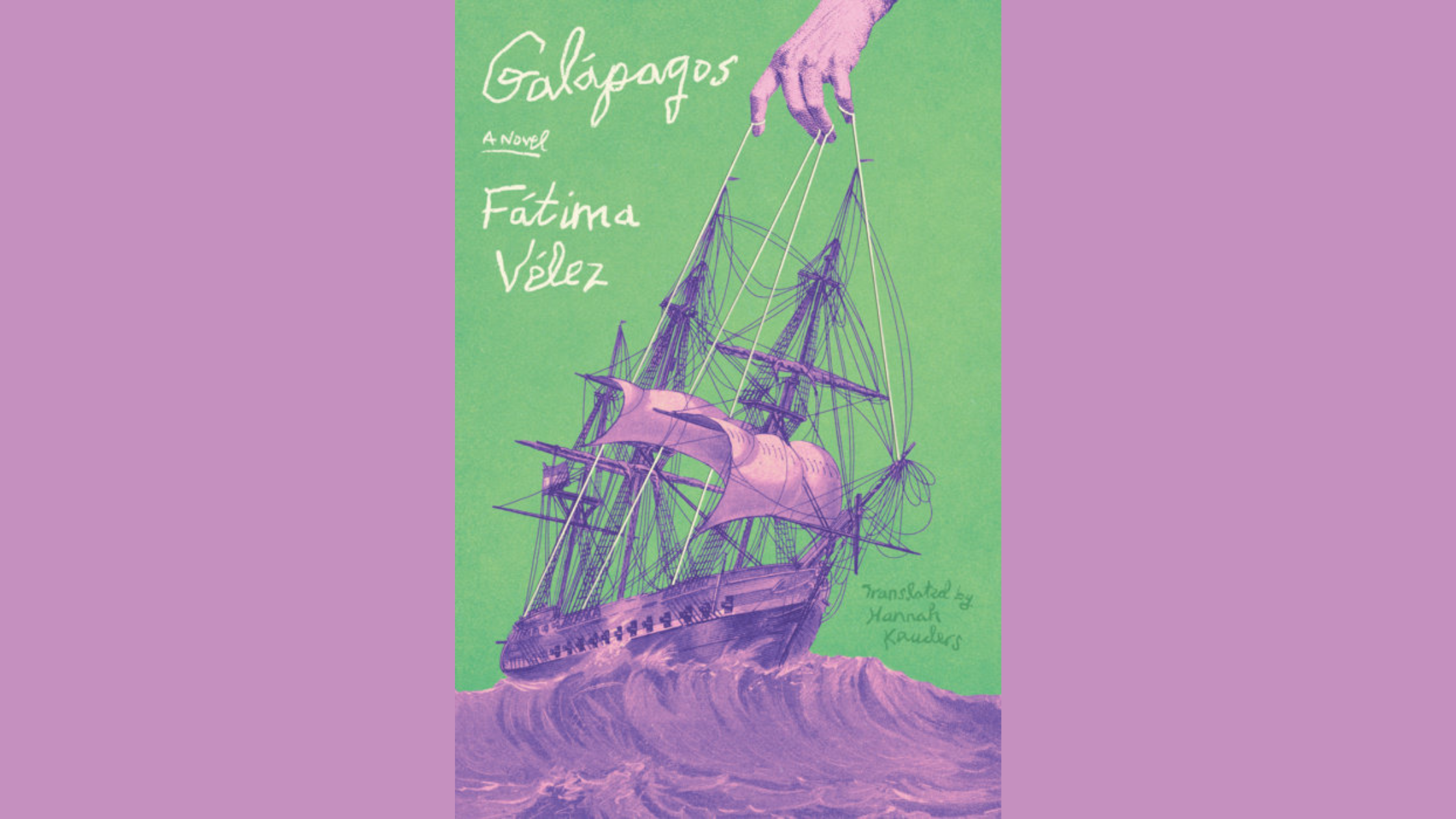
In Fátima Vélez’s gorgeous debut novel, Lorenzo is a brilliant painter who has temporarily stopped painting in favor of more quotidian pastimes. He lolls about in his partner’s bed, watching French films and corresponding with old lovers. His idyllic lifestyle comes to a halt, however, when one day his fingernail falls out of his nail bed. When more fingernails follow suit, Lorenzo decides to hit the road. He embarks on a journey that will take him to the streets of Paris, a farm in the French countryside, and ultimately a ship bound for the Galapagos Islands. On the ship with friends and lovers, many of whom are also succumbing to the same unnamed illness, Lorenzo attacks life ferociously, reveling in stories from the past and incredible food and drink. Based in part on the life of artist Lorenzo Jaramillo, Galapagos is a vibrant exploration of creativity, sexuality, friendship, mortality. In its starred review, Publishers Weekly wrote, “Vélez stuns with her corporeal descriptions and baroque literary allusions. This is a knockout.” We spoke with Vélez and translator Hannah Kauders about the novel’s inspiration, the joys of transcribing real conversations, and the psychological toll of translation.
The novel really grabs you from the beginning. I found myself captivated by Lorenzo and wanted to know everything about his life. I was curious to hear about what the starting point for the novel was for you? Was it a character, the situation, or did you want to write about this specific time period?
Fátima Vélez: It came from a personal experience. When I was a child, my dad had a lot of friends who died of AIDS. It was very traumatic in my family, because every two weeks there was a call that another friend had died. That really marked me and scared me as a child. Even remembering that time now makes me feel very emotional. I was maybe seven years old, and I started becoming very afraid of death because of AIDS. I was attacked by this feeling that I was going to die from AIDS, even though I didn’t know how it was transmitted. I didn’t have any idea that my dad’s friends were gay, and so they were part of a community that especially struggled with AIDS. At that point, I just knew it killed you very suddenly. So that was a part of it, and then I forgot about it. I think to survive, I just put it out of my head.
When I was twenty-eight-years old, I saw a documentary from a Colombian filmmaker, Luis Ospina. It was about a painter whose name was Lorenzo Jaramillo, and he was basically dying in front of the camera, talking with Luis, who was his friend. He was losing his senses, and the movie is actually divided by the senses that he starts losing. It reminded me of my childhood, of those experiences with AIDS. In the documentary, they never mention that he’s dying from AIDS, because it was a 1991-92 documentary. At that point, it was kind of prohibited to talk about AIDS in Colombia. It was what I felt as a child. You knew it was there, it was a terror, but no one really explained what it was. I got these memories back, and I thought, “I want to write about this. I need to write about it.”
I started doing a very crazy thing, which was transcribing the documentary and all of Lorenzo’s words. I really liked what he said and how he spoke. I liked the character. I love to transcribe, because it makes me feel like a writer. I’m so inspired by the voices. One day, my father came in. My dad asked, “What are you doing?” I told him, “I’m writing about this painter who I found out about.” He said, “No way! I went with him to a trip to the Galapagos Islands in 1989. All of my friends who were on the trip died of AIDS but me.” I was like, “What? What are you talking about?” I was very interested, and he showed me pictures of that trip with the turtles. There were actually two women on that trip, and the rest of them were his gay friends. My dad is not gay, but he used to hang out with a lot of gay people. I started connecting everything—my own fears, my dad’s trip, and the documentary—and that’s how Galapagos was born.
I’m curious about you talking about how you enjoy transcribing and how that’s a way for you to enter into a character. Can you talk more about that? What have you learned as a writer from transcribing other people’s voices?
FV: I love other people’s voices. It’s my favorite thing. At one point, I used to record my conversations. It was a very bad practice, I know! (laughs) I got in a lot of trouble at some point with a boyfriend because he noticed I was transcribing, but that’s another story. But I used to do that a lot, and then I would transcribe and play with those voices. I’m originally a poet, and I really like to make sculptures with voices. I do that a lot in my poetry. Galapagos also comes from a lot of conversations that I transcribed, and I just put them together in a way that made sense and also doesn’t. As you might notice, the book is very nonsensical, it has a lot of the collage of transcriptions I enjoy working with.
I wanted to clarify, even though the basis of the story is based on real people, characters in your book are different than the characters in the documentary, correct?
FV: I play with that because I like a real reference, a real voice. Then I take it away from the original reference and put it in another imaginary setting, but I’m playing with the original as well. It comes from a real place, but it’s disfigured or disembodied. There’s something about the reference, the format, that I like to play with.
Hannah, I read the essay that you wrote for Literary Hub where you write about how your father’s death coincided with working on this book and the psychological demands that translation requires. It made me think about translation in a whole new way. Can you talk about what the particular challenges were in translating this novel?
Hannah Kauders: I don’t even think I’ve sent this to Fatima, because I got shy about it. My father passed away less than a year before I started translating this book. Something that came to mind as I was just listening to you, Fatima, is that I actually traveled to the Galapagos Islands with my father when I was a child. What’s so strange is that when you’re in the world of literature, it feels at once like the same world you live in and a different world entirely. So in my mind, the Galapagos of your novel is on a different plane than the Galapagos that I saw when I was a child.
Thinking about translation is particularly interesting. My dad was blind from birth. I think one of the reasons why I was always drawn to storytelling was because my daily life involved a lot of translation of the visual for another person and describing what was in the world around me. Even before I knew Spanish, that was my first exposure to a kind of translation from one realm to another.
But there were so many joys and challenges of translating this book. The one that I struggled with most and cared about most was preserving the really subtle and deft shifts in register throughout the book. There are some moments where the book feels so spoken. I actually didn’t know this until you just said it, Fatima, that part of the process of writing it involved transcribing actual speech. But there are parts of it that feel so oral and spoken. There are these very rare moments—but when you reach them, they’re so satisfying—when the book slips into these really lush descriptions. I think you use them so sparingly, Fátima, because we need to earn it. It’s like not everything is meant to be beautiful in this world, right? And the things that are beautiful are not the things we might expect from our daily lives.
I wanted to be very cautious to preserve what was beautiful in the text, but also not to manicure or make pretty the things that wanted to be really mundane and crude. Making sure that I wasn’t trying to make parts beautiful that weren’t asking to be was hard. But once I realized that it could be both beautiful and mundane and pretty and strange at the same time, I think that unlocked a method that ended up working for me.
The book plunges you into that time period of 1989. I was curious to hear you talk about the research that you did.
FV: It was a very eclectic process. It came from different things, like asking people who lived during that period. It’s funny, because I never went to Paris before writing about it. But I have a lot of friends living there, so I just asked them to write about their days, their routes. I compared them with the time period of 1989 using what I found on the internet. I’ve never been to the Galapagos Islands, so this is a made-up world, it’s an imaginary world. I took from lots of references. I worked with a lot of materials at the same time.
Lorenzo is a painter who you could say is creatively stuck when the novel begins. Can you talk about what the challenges were in writing about an artist working in a totally different medium, and writing about the creative process in that way?
FV: I really admire painters. I would have loved to have been a painter, because I feel like writing involves so much thought. You have to sit down and work with language. It’s very serious and kind of boring. I’ve always had this fantasy of expressing myself with colors, but I don’t know, I’m stuck with writing. (laughs) I grew up with a lot of artists around. The subjectivity of painters has always made me curious. I’ve also had a lot of painter lovers, and these guys are obsessed with painting! They have this specific mindset. I tried to put together a lot of those experiences, like how I perceive the subjectivity of people who paint. Lorenzo was the result of that, but at the same time, he’s not obsessed. I think that comes from me, because I’m a writer, but I’m not always writing. I have kids, I have a life, I’m a PhD student, so I don’t have as much time to write. Maybe I’m very curious and obsessed with the obsessions of other people, but I’m not really that obsessed with my own work. Or maybe I am and I don’t have the time. But that’s kind of what Lorenzo is about, all these things, art as an obsession, and the different formats that you can express yourself.
HK: I feel like you probably know this, Fatima, but I this is a really painterly novel. What stood out to me so much is the networks of images in the novel. There’s this recurrence of hands, whether it’s his hands painting or his hands producing pus, which is a different kind of creativity. This fantasy he has of going to the French countryside, and having hands that work the land. And then Paz Maria’s hands, which you can never touch, because they’re always sheathed. I just think that these networks of images give the novel this breadth.
FV: When I was writing the novel, there was a huge exhibition, a retrospective of Lorenzo’s work at the National Museum in Bogota. I got to know all of his work, and I talked to the curator of the show. It was amazing to get to know all his work, and I did a lot of extra visits. I took a lot of notes of his paintings. They inspired me a lot, because he has all these different sides. He has a very luminous, bawdy side, and he also has very dark paintings, like horror paintings. I spent time trying to figure out how he did the brushstrokes. I tried to put that energy into the novel, not a realistic thing, but more like putting the energy of his work into the words.
I’m kind of obsessed with the idea of the body producing art, all the things that body can do. It’s so beautiful. It’s always producing things, right? You make a cut, you can scratch it, and the scratching will produce a scab. It will make things with the body, and that’s something that I put into my character too, the idea of he’s continuing to produce even when he’s not working with his art.
And finally, what role the library has played in both of your lives?
HK: I’ll jump in first. My grandmother was a librarian for children in Sudbury, Massachusetts. Everyone on that side of the family is very obsessed with books. When I was young, I was very lucky that I would get to go and stay with my grandmother. From her time at the library, she had a collection of hundreds of puppets. She would read me books and I would get to choose the puppets that she would use the puppets to tell the stories, and she would use them to animate different characters in the stories. So the love of the library was ingrained in me very young. Everyone else in my family is obsessed with libraries too, so it’s in the genes. I love librarians.
FV: On my dad’s side, there’s a lot of readers like and also books collectors. But from my mom’s side, no one reads. They’re very religious, very affectionate, but they don’t read. I grew up with both families. My mom’s side of the family loves to party. They love music and dancing, but they don’t like to read. On my dad’s sides, they’re very intellectual and they’re very into books. When you go to a place with them, all of them are reading their own book.
But then I started to like reading a lot. I spent a lot of my life with family members who love to read. When I was in school, I loved to go to a library while the other people were playing sports. I’ve been a student my whole life, so I’ve spent a lot of time in in libraries. They’re part of my world. I used to think about Jules Verne. He never traveled anywhere. He spent most of his writing life in a library, so he traveled to so many places, just staying there. I really like how libraries are these places that are very heavy because they have all the knowledge, but you can travel when you’re inside them. They’re like a ship, you can go everywhere.