
Katie Bernet On Her Twisty Reimagining Of Little Women
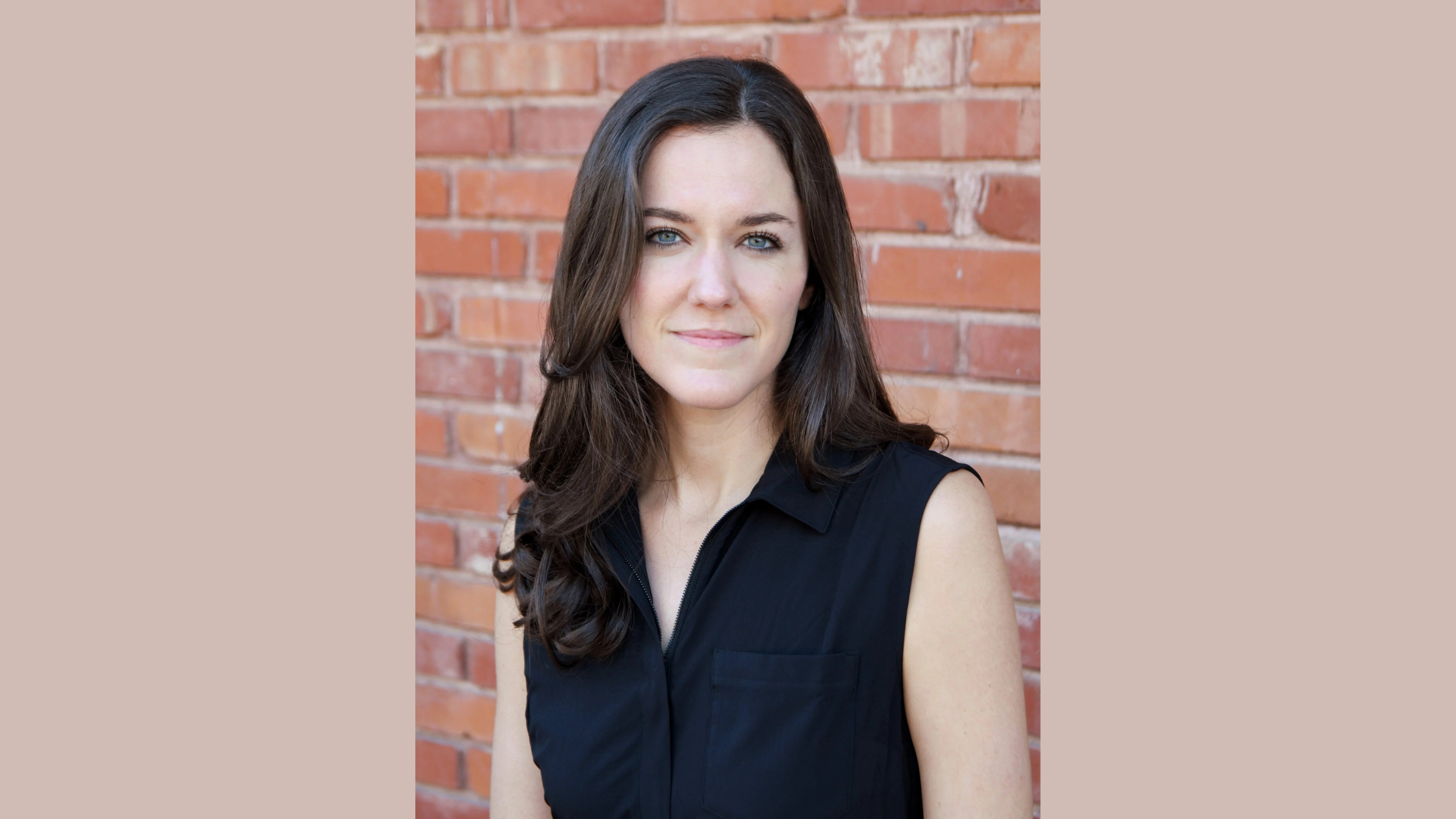
Using Louisa May Alcott’s Little Women as a springboard, Katie Bernet’s dark and twisty Beth Is Dead transports the complicated lives of the beloved March sisters to modern times, where Jo, Amy, and Meg are reeling after the shocking death of their beloved Beth. When Jo suspects her sister was a victim of homicide, she dives into solving the murder. As Jo uncovers more clues, her investigation forces the sisters to reckon with secrets they’ve been withholding from each other that not only brand each one a likely suspect but could also destroy the family. Jumping adroitly from the days leading up to Beth’s murder to its devastating aftermath, Beth Is Dead honors the complexities of Alcott’s characters while exploring how they would thrive— and struggle—in modern times. In its starred review, BookPage wrote, “This simmering page turner is a multilayered novel about sisterhood, dreams, independence and the pressures of modern culture, not to mention a superb tribute to the original.” Bernet spoke with us about her love of mysteries, the dark side of Alcott’s famous characters, and letting Beth have a voice in the novel.
I wanted to start by asking how did this book come about?
I’ve always been a big fan of Little Women. I read it in high school for the first time, and I’m one of three sisters, so I really loved the sisterhood aspect of the story. I always wanted to write something that was multi-POV. I was really inspired by Barbara Kingsolver’s The Poisonwood Bible, that’s been one of my favorites for a long time. Those two things were kind of dancing around in my head. And then, also, I love reading mystery thrillers. I had written five unpublished manuscripts, and I was trying to decide what I wanted to do for my next one. I felt a lot of pressure to do something different. I actually made a love-hate list, and I wrote down all the things that I love, all the things that I hate, and those things that I just mentioned were on the love list. So I started pulling out different combinations from that list, and realized that combining Little Women with a mystery thriller gave me the opportunity to write a multi-POV novel, and it gave me the opportunity to conquer a lot of the things that I had on my hate list. So that’s where it came from.
Obviously your love for and respect for Little Women shines through in this book, but also your love for mysteries. I wanted to hear a little bit more about your relationship with mysteries. Who were the writers that were influential to you as both a reader and a writer?
I think probably the first was The Boxcar Children series. More recently, in the YA space, I really love Tiffany D. Jackson, Holly Jackson, and Karen McManus. I was reading a book by Andrea Bartz on vacation, and I didn’t want to put it down. I didn’t want to go to the beach, because I wanted to finish this book. That’s when I had an epiphany, if I’m having this much fun reading a book that’s a thriller, maybe I should try writing a thriller. So, thanks, Andrea. (laughs)
Beth Is Dead is set in contemporary times. In your opinion, what is it about Louisa May Alcott’s depiction of the March sisters that makes it possible for them to be so successfully reimagined and different in a contemporary time?
I think they’re all so timeless. I think the characters play off each other. They share a lot of things, but they also have really different strengths. They’re archetypes, in a way, and they’ve become archetypes in our world today. It’s like picking your favorite Spice Girl. Are you a Jo? Are you a Meg? And I think the qualities that they have are just timeless, and they’re things that women today can still relate to. And things have changed. I had to think a lot about what would the characters’ conflicts be today? When you take a lot of those limitations that society placed on women at that time in the 1800s away, who are these characters? But I think the cool thing is, they remain the same in their core.
One of the really exciting things about reading the book is that each of the sisters is keeping a secret, or maybe multiple secrets, from each other. I don’t want to spoil anything, but I wanted to hear you talk about what it was like to explore the darker the more morally complicated sides of the March sisters that maybe Louise May Alcott couldn’t touch in the 1800s.
I think actually the thing that inspired me the most there was Greta Gerwig’s film adaptation, and the famous scene where Jo breaks down and she says, “I’m so lonely.” I realized when I was watching that, that I’d never thought about Jo in that way before I’d seen that version of the film. I just didn’t think of the side of Jo that’s lonely. That made me think, “Okay, all of these characters have a dark side. They have struggles or sadnesses that they’re hiding.” That’s where I started to develop their roles in the mysteries. What would their emotional struggle be? And then how does that manifest as a potential motive?
It also seems you’re able to play with other characters exploiting their vulnerabilities or these darker sides.
Definitely, especially some of those classic characters that we know sort of did that in Little Women. Sally Gardner really exploits Meg in the original, so that gave me something to play with.
Little Women is obviously a book that readers have such a passionate attachment to. What’s it been like to talk to readers who have gotten a chance to read Beth Is Dead?
It’s been really cool, because I’ve gotten a mix of reactions. I’ve met people who are Little Women fanatics, who have told me that they enjoy meeting the March sisters in a different way, in a different time and place. But then I’ve also met readers who have never read Little Women who are now interested in reading Little Women. That’s really cool, because I’m like, “Haha, I turned you into reading one of my favorite books! (laughs)
I wanted to get back to talking about the multi-voice POV, which you touched on with your love for The Poisonwood Bible. We get to hear from all four sisters, both in the aftermath of Beth’s death, and then the days leading up to it. Besides wanting to play with the multi-voice approach, what drove that choice to hear all four of the sisters in a way that we didn’t get to hear from them in Alcott’s book?
If I’m honest, part of it is my natural style is first-person narrative. That’s just where I feel the most comfortable. So some of that drove the decision making, just where do I feel the most comfortable? In Little Women, you’re reading obviously in third person, and so you’re outside of the characters. But it was great for me to force myself to actually get into their heads and think about how they would feel on the inside. That was a huge part in me being able to develop their conflicts. Some of the themes that I wanted to draw out with these characters required getting in their heads.
And then, for me, it was really important that Beth get to have a voice in the narrative. That drove the decision of having the two timelines. From the beginning the concept was Beth is found dead in chapter one, and so if she’s found dead in chapter one, but I want to give her a voice, we’ve got to have flashback scenes and things like that. A lot of the book was just one choice leading to another.
In Beth Is Dead, the March sisters are all dealing with the aftermath of their father publishing this incredibly successful book that’s based on their lives, and the public’s perception of them. At one point, Jo says, “You’re right about the readers. They latched on to the most basic and stereotypical parts of us. People remember me for being brave and ambitious, but they ignore the fact that I’m also quick-tempered and painfully lonely.” It seems like your book is exploring a lot of people’s perception of Little Women versus the actual text of it. I was curious just to hear you talk about that.
That was something that wasn’t what I necessarily set out to do with the book, but it’s what I found as I was writing it. I figured out by the end of the first draft, “Okay, this is actually what I’m trying to say with this story.” It was interesting for me, because I think the realization came in two ways. One was inspired by—like I said—Greta Gerwig’s version of the film with Jo. But also, I was thinking about Beth a lot in the beginning of the story. This is called Beth Is Dead. This is a book about her murder. Before I wrote this book, I actually didn’t like Beth that much. I thought of her as really quiet and passive and gentle and maybe the least ambitious of the March sisters. But as I was writing this book, rereading Little Women, and watching all the films, I started to realize that she’s brave in a different way, in a way that I think is harder than Jo’s bravery. She makes space for other people. In the original she’s facing her own death, which is something I think we can all agree would be pretty difficult. But even in that, she’s gracious, she’s kind, she’s graceful. I started to have a lot of admiration and respect for her, and I think that’s where that theme started to come to me, like, “Wow, I forgot that she’s really three dimensional. I was only thinking of her in one way.” That actually happens with the March sisters a lot. We think of them in one way, partly because it’s fun to do that. It’s like I said, we get to pick our Spice Girl. It’s fun. I don’t think there’s a problem with it, but I think it’s good to remember that in the original text, they’re really three-dimensional. They all have different aspects of their personalities and we kind of flatten them out a little bit.
A line from Beth that really stood out to me was when she says, “I think the most complicated thing a person can be as kind.” It’s really moving to see how Beth is struggling with her own kindness and the elasticity of that trait.
She even looks down on herself in the book, she thinks she’s not enough. But I think it’s because kindness is undervalued a lot of times in society. It’s really important for her to realize that about herself, that she has a skill that her sisters don’t necessarily have.
I wanted to ask about the plotting of the book if there’s a way to talk about it without spoiling the end. I was wondering where in the process did you figure out who the murderer was? Was that something you discovered, or was that something you explored during the outlining of the book?
That was actually—and I think I can answer this without spoiling anything—one of the first decisions that I made. I knew before I started writing the story who the killer would be, and the motive was something that came as I worked. But I knew who the killer would be, and that was partly because I wanted to honor the original story. I won’t say any more about that, because that might be a spoiler. I just wanted Beth’s murder to make sense with the original story.
Can you talk about your work and your involvement with the DFW Writers’ Workshop?
I love the writers’ group I joined. It’s been about eleven years now. I joined right after I graduated from college. I walked in knowing absolutely no one, and it’s been amazing. I go every Wednesday, and it’s a live reading critique. We read what we’re working on, and we get feedback right there in the moment. I’ve workshopped every manuscript I’ve ever written in that group, including Beth Is Dead.
I’ve read in other interviews that you’re working on another mystery reinterpretation of a classic. Is there anything you can say about that, or is it still too early in the process?
I’ve actually started revealing what it is. It’s a retelling of The Secret Garden as a mystery thriller. I’d say it’s a little darker than Beth Is Dead. It’s a little more Gothic in vibe and tone. I’m having fun with it.
Finally, what role the library has played in your life?
Oh, wow, it’s hard to sum that up. I remember being a kid and going to the library and getting a reading challenge every summer, where you’d have little stamps that you’d get for how many books you read. Those are some of my favorite memories, because it was so much fun to sit down and just spend time with a book and then exchange it for something else at the library. I just loved doing that as a kid. Now, in the last month since Beth Is Dead has come out, it’s been really amazing to get support from librarians. I’ve had friends who are librarians and even strangers reach out and say, “Hey, would you want to come speak to our book club” or things like that. It’s just been really helpful to have librarians connecting me with readers. That’s essential. It’s been huge.
Tags: Katie Bernet