Creating Space for Parents: A Family-Centered Book Club at the Library

A Collaborative Idea: A Library Director, Youth Worker, and the Local Rotary Club
Parenting is a community affair at the Crown Point Community Library (CPCL) in Northwestern Indiana. Recognizing the need for connection
and support among caregivers, CPCL launched a new program, the Parent Book Club, designed specifically to bring parents together in a welcoming, low-barrier environment. The program was spearheaded by CPCL Library Director Julie Wendorf, who also serves as the Indiana Library Federation’s 2025 President of the Board of Directors. The Parent Book Club grew from conversations among library staff about how to better serve families who want opportunities for adult learning and discussion but often face barriers such as childcare, transportation, or scheduling conflicts. As a quarterly program built around caregivers’ needs, the Parent Book Club intentionally included childcare as part of the experience. Parents were invited to bring their children to the library while participating in book discussions, removing one of the most common obstacles to adult programming attendance.
Building the Partnership
To make the program possible, Crown Point Community Library partnered with the Crown Point Rotary Club, a long-standing community organization with a shared interest in family well-being and civic engagement. Wendorf, herself a Rotary member, approached the organization about sponsoring the program and supporting its childcare and activity components.
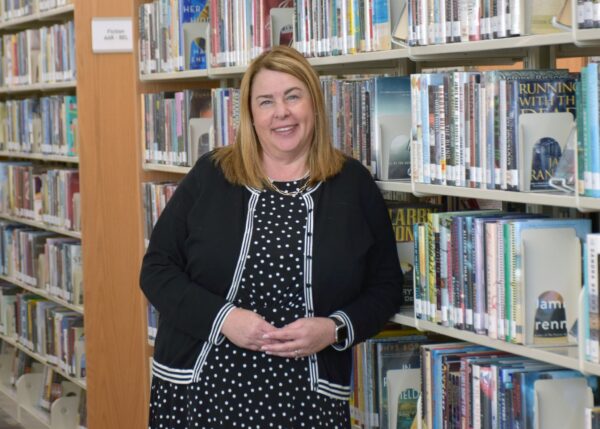
Crown Point (IN) Community Library Director Julie Wendorf
“The Crown Point Community Library decided to partner with the Crown Point Rotary Club because of our shared commitment to strengthening the community,” Wendorf said. “The Rotary has been a great partner in helping us expand our reach and increase participation in meaningful programs.” The partnership was quickly formalized, allowing CPCL to move forward with planning and promotion. The Rotary Club’s sponsorship covered supplies and supported the staffing needed to provide safe, engaging activities for children during book club meetings.
This collaboration reflects a broader trend in public libraries, where successful programming increasingly relies on partnerships and shared resources. By leveraging existing community relationships, CPCL was able to design a program that was both responsive to patron needs and sustainable for the library.
Designing a Program for Parents and Families
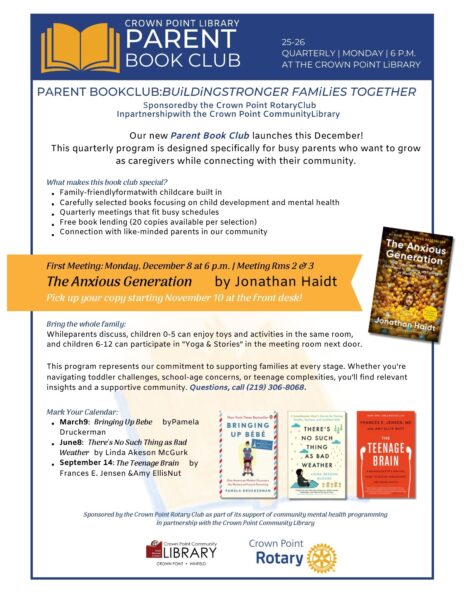
The Parent Book Club is carefully structured to meet the needs of families with children of different ages. Two separate childcare spaces were created to ensure age-appropriate activities and supervision. Children ages 0 to 5 are cared for in a dedicated room with toys, books, and educational activities designed to encourage play and early learning. For youth ages 6 to 12, the library offers a structured program called Yoga & Stories, held in a meeting room adjacent to the book club space. This allows older children to participate in calming, engaging activities while remaining close to their caregivers.
The Parent Book Club itself meets nearby, creating a sense of connection without disruption. This thoughtful layout ensures that parents can focus on discussion while knowing their children are nearby, safe, and engaged. The program also reflects CPCL’s broader philosophy about library service. As one of the few remaining truly open public spaces, the library welcomes patrons regardless of background, resources, or life circumstances. The Parent Book Club is designed to embody those values by creating a judgment-free environment where caregivers could connect, learn, and support one another.
 From Idea to Implementation
The original idea for a parent-focused book club came from a Youth Services staff member, who recognized that while libraries often offer robust programming for children, fewer opportunities exist for parents to engage with one another around shared experiences and concerns.
Wendorf brought the idea to the Crown Point Rotary Club with the goal of securing sponsorship and community buy-in. The response was immediate and enthusiastic, illustrating how effective library programming often emerges from listening, networking, and responding directly to patron needs. “This is how public libraries build new programs,” Wendorf noted. “By observing our community, listening to patrons, and working with partners who share our goals.” Once the program structure was finalized, CPCL’s Communications Director, Laura Clemons, helped promote the Parent Book Club, ensuring the program reached a broad audience.
More Than a Book Club
While the Parent Book Club centers on shared reading and discussion, its broader goal is to foster connection, reduce isolation, and support family well-being. Topics selected for discussion reflect real concerns faced by parents, including bullying, youth mental health, social isolation, and recognizing signs of depression in children. Participants are encouraged not only to discuss the reading but also to share experiences, resources, and practical strategies. The program creates space for parents to network with one another, exchange advice, and build informal support systems.
For many families, the library already serves as a “third home,” a place beyond work and school where community life unfolds. By offering a program specifically designed for parents, CPCL reinforces the library’s role as a hub for connection across generations.
Over time, these connections can have lasting impacts. Parents meeting through the book club may go on to form friendships, organize playdates, or continue conversations beyond the library walls. The program demonstrates how libraries can facilitate relationships that extend well beyond a single event.
Addressing Barriers Through Library Space
The Parent Book Club also highlights how libraries are uniquely positioned to address barriers such as childcare, transportation, and access to safe meeting spaces. Public libraries already host after-school programs, social services, tutoring, and community meetings. By adapting existing spaces and staffing models, CPCL is able to extend that support to parents seeking adult programming.
The timing of the program is also significant. During winter months in Northwest Indiana, colder weather and shorter daylight hours can contribute to isolation and seasonal challenges for families. The library’s warm, welcoming environment offers a space for connection during a time when people may otherwise stay home.
Broader Community Engagement
The Parent Book Club is part of a larger ecosystem of partnerships at Crown Point Community Library. CPCL has previously collaborated with the Crown Point Rotary Club on programs such as Community Forums on Youth Mental Health, which brought together licensed clinical social workers, community leaders, and advocates focused on drug prevention and youth well-being. These partnerships reflect the library’s role as a convener, bringing together organizations, professionals, and residents to address shared community concerns. By hosting and facilitating these conversations, CPCL strengthens its position as a trusted civic institution.
A Carnegie Library with a Community Focus
Crown Point Community Library serves as the county seat library for Lake County, Indiana, with its main location at 122 N. Main Street in Crown Point and an extension branch, the Winfield Branch, serving Winfield Township. As an “active status” Carnegie Library, CPCL continues a long tradition of public service and community investment. In recognition of this status, the library is slated to receive a $10,000 gift from the Carnegie Corporation of New York in January 2026, further supporting its mission and programming.
The Parent Book Club debuted in December 2025, with its inaugural discussion featuring The Anxious Generation by Jonathan Haidt. The program’s successful launch demonstrates how thoughtful planning, strong partnerships, and a clear understanding of community needs can result in impactful, sustainable library programming.
Looking Ahead
The CPCL Parent Book Club offers a model that other public libraries can adapt to their own communities. By centering caregivers, integrating childcare, and working with trusted local partners, libraries can create programs that strengthen families and build lasting connections.
At its core, the program reflects what public libraries do best: bringing people together, responding to real needs, and creating spaces where learning and community flourish.