Genius Is Not Reserved For An Elite Few – Nelson Dellis On His Fascinating New Book
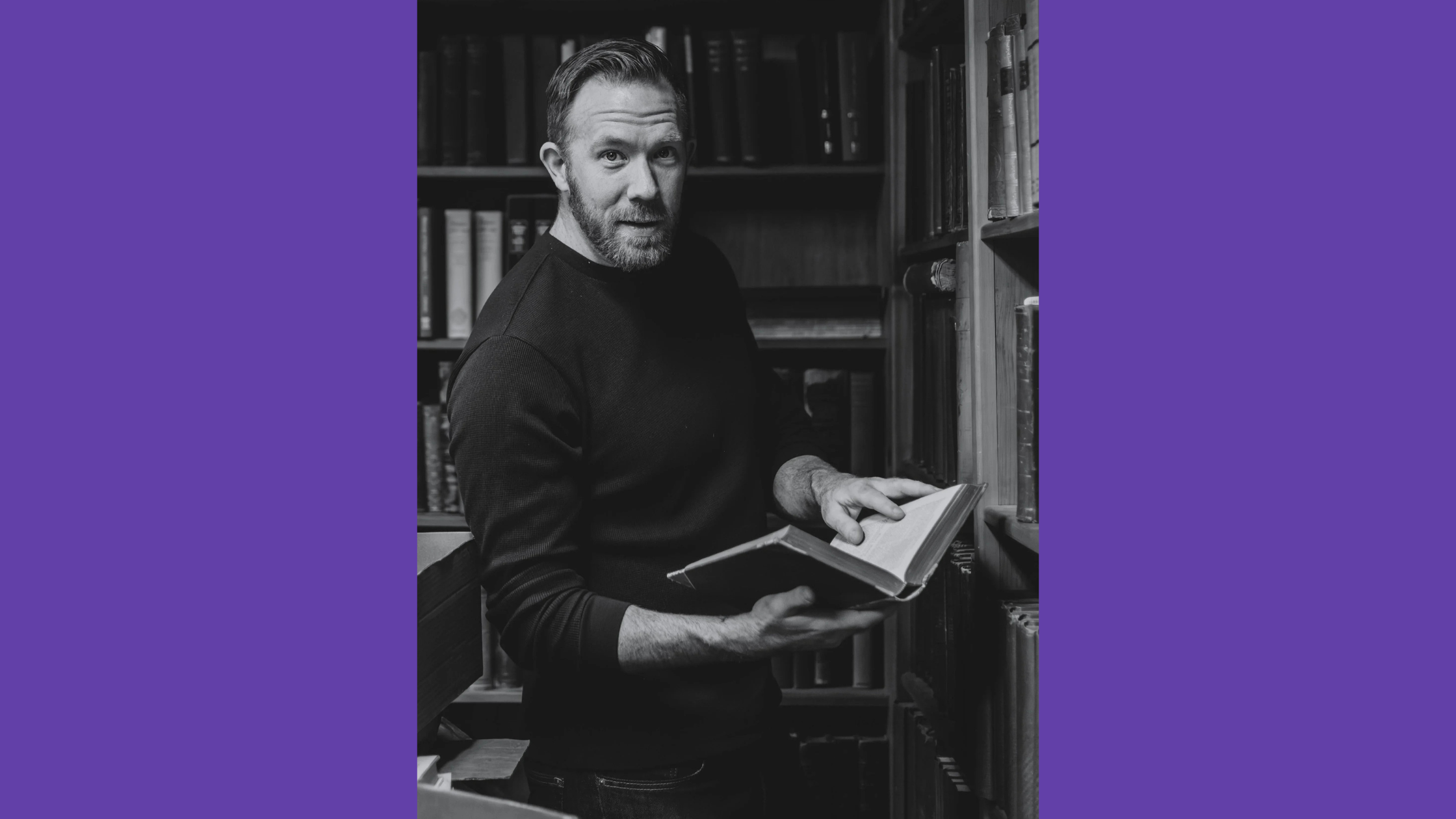
To the layperson, Nelson Dellis’s accomplishments seem unachievable. A six-time USA Memory Champion, Dellis’s feats of memorization seem otherworldly. In Everyday Genius, Dellis shares his process with readers and delves into the techniques he uses to hone his memory. Yet Dellis doesn’t limit his scope to memory, but re-examines our concept of genius by introducing concrete skills readers can use to hone their focus, amplify their creativity, and boost mental cognition. Throughout the book, Dellis profiles different geniuses, drawing parallels with their work to the various skills he focuses on in each chapter. Dellis spoke with us about his introduction to the world of memory competitions, common misconceptions people have about memory work, and the role mental cognition plays in an increasingly technological world.
Your work is so fascinating and, from the outside, seems so out of reach to the average person. Can you talk about what initially sparked your interest in memory work and researching how the brain operates?
I never had a good memory or ever thought twice about my memory abilities—which were nothing to write home about—until my grandmother started developing symptoms of Alzheimer’s in the early 2000s. I witnessed her basically lose her memory. It was inspiring in a way, and frightening and terrible and sad to watch as she eventually lost her life in 2009. It inspired me to reflect on what it meant to have a healthy brain and a good memory. It led me down this rabbit hole of studying the brain and memory techniques. I heard about this memory competition, and I learned very quickly that the people who compete in these competitions are all self-trained. Nobody has an amazing natural memory. They’re all people who realized the same thing I did and started to train the memory with techniques that have been around for thousands of years. I took that to heart and committed myself to learning those techniques. I became hooked on them, and eventually became one of the top competitors.
You really break down exactly the techniques that you use in the book. Can you talk about what are the biggest misconceptions about the way you’ve developed your skills with memory?
I think most people assume that you’re either born with a good memory or you’re not, and that’s the end of the story. And that’s so, so wrong. I’m an example of that, so many of the competitors of these competitions are an example of that. I now teach people how to improve their memories. I’m a memory coach, I’ve worked with hundreds and hundreds of clients, and all of them have come to me because they say to themselves that they have a bad memory. That is time and time again shown to be not true. It’s just a thing that people have come to believe and they’re stuck with that thought, right? Oftentimes, whatever you think about yourself is going to be true, because that’s your inner voice. But if you can change that, then there are so many more opportunities out there. Memory is something that everybody can improve. I’ve seen that time and time again, and it is not a fixed thing.
The other misconception is that people think that photographic memory exists. To an extent, I think we all have photographic memory. You could look at something for a fraction of a second, close your eyes, and kind of have an image or a memory of it. I think where people think photographic memory lies is where people can memorize a whole page when they’re studying. That they just take a snapshot of it in their mind, and when the test comes up, they can see that page in their mind. We all can kind of do that to an extent, but I’ve never truly met anybody with photographic memory in the sense that someone takes an actual photograph with their mind and they can access it like a PDF in their brain—zoom in, zoom out, find every single word. I’ve never actually seen that. I don’t truly believe that it exists. I’ve never seen anybody show up to a memory competition and say, “Hey, I have a photographic memory. I’m gonna win this thing.” Nobody ever. Those are some of the common misconceptions.
I love what you were saying about people having a fixed mindset about themselves or telling themselves that they have a terrible memory. I think this book does a wonderful job of dispelling people of that notion.
Memory is one thing, but I think just in general, we all have this ability to exhibit genius-seeming traits, whether it be for remembering more, calculating with numbers better, reading faster, processing information, or being more creative. Just like memory was something that I could train and there were techniques for it, all these little pockets of cognition have their own set of techniques that you can work on and train and improve on. Genius isn’t reserved for these people that seemingly just have it. If you look deeper into the people that we naturally accept to be “geniuses,” you find that they are using some strategies that they have trained themselves on, maybe unknowingly or subconsciously. But there is something that was worked on, and it wasn’t just a gift from God. There might be some very rare cases where that happens, but in general, I think everybody has the capacity to be a genius.
You’re primarily known for your memory work, but in Everyday Genius, you’re really showing people how they can strengthen their brain to improve their focus, build on existing skills, or master new skills. Can you talk about what prompted you to write the book?
It started with this concept of genius. Over the years, as I’ve gotten deeper and deeper into memory work, I would naturally show off what I could do. Sometimes people would egg it out of me, sometimes I would just do it to impress people, and sometimes it was just to test myself on whether I could do it in front of an audience. I would find time and time again, people would say, “Holy crap. I could never do that. You must be a genius!” Or, “That Nelson guy, what a genius!”
I’d say, “You misunderstand. I learned how to do this. You can do it too.” I realized quickly that this idea of genius is so subjective, and if I can learn how to do something that people are labeling as such, then anybody can be a genius. I started to look into more of these people that we call geniuses, and I feature a lot of them throughout my book. It’s just something that I think we all can tap into. Genius is not reserved for an elite few. I think it’s something that everybody can get into.
Throughout the book, you profile different people from history who we would label as “genius.” I imagine you had a wealth of people to choose from. What went into selecting the different geniuses to include in the book?
Some are the ones that most people might think of just quickly, if you were saying, “Hey, who is a historical genius?” Einstein comes up, Da Vinci comes up. I actually sent out a questionnaire to my followers before I wrote the book and asked who are four geniuses that immediately come to mind? It was usually the same ones: Albert Einstein, Tesla, Da Vinci. Some of them are featured in here because you can’t ignore them. But then there’s a bunch who I’ve personally found along my journey of discovery into cognitive abilities, also ones that are related to the topic that I’m talking about in a certain chapter, whether it’s focus or creativity or intuition.
I got so much out of the book, but I especially responded to your chapters on focus and creativity, because I think you outline a lot of very specific problems that people have in maintaining their focus with all the technological distractions around them. Can you talk a little about what you’ve learned regarding that?
With focus, it’s very apropos with what’s currently happening in the world where we have so many things external to us that are vying for our attention. In fact, these machines around us are focus-sucking machines—that’s what they’re designed to do. Focus is at the root of it all, because more attention from us means more dollars for the companies behind them, in a very general sense. So oftentimes the techniques for focus are really, how do I fight that? I talk a lot about different kind of tips and strategies on how to maximize your workspace and to minimize those distractions, and to help fight what your brain is just weak at doing, given the tech that’s overpowering it, where it can just draw your attention out.
That translates to creativity, because think of the AI now, where we can just ask it a question or tell it to come up with some ideas. Some of the ideas can be good, but they lack this human element of creativity. I spent a little part of one of the chapters diving into some ways to break through blocks where you can’t think of the right thing, where you want to be more creative. A lot of it stems from breaking away from tech, going outside, going for a run, putting distractions somewhere else, thinking about things backwards or upside down. There are so many different tips, but it all stems from fighting against the machine.
You mentioned AI, and we’re living in a time where AI seems to be a bigger part of people’s lives where it can do all this stuff for us. What’s your argument for doing the work yourself with your brain?
Yeah, why should I come up with my own ideas if I can just ask AI to come up with them for me? Why memorize anything if I can just look it up in a fraction of a second? My argument is twofold. One is that I started this journey because of witnessing my grandmother lose her cognitive abilities, and that was because it was a disease that could very well take me too. All of us are susceptible to that, but in light of modern tech, we’re faced with a new kind of potential “disease” that could impact our minds even worse. I think we’re already seeing that. As a way to fight that I encourage trying to remember things more, trying to actually mentally calculate things more, trying to cultivate your own creativity—even if it does take a little longer, and maybe it’s not as good as what you could get out of an AI machine—just for keeping your mind strong so it doesn’t atrophy, because that’s what’s happening. And what will happen more is that we will lose these abilities because we’re outsourcing them, and what happens when you don’t use a certain muscle, right? It atrophies and you get weaker. It’s the same with your brain.
The other side of it is this human element that we’re giving up or acquiescing to this AI breadth that is trying to take away our cognitive agency. I think there’s something really human about being able to do things with our minds, and the less we do that, the less we are interacting with our humanness. I’m really concerned with us losing that. For me, that’s an easy way to motivate me to keep doing the things I’m doing with my mind. I don’t want to lose that, and I don’t want AI to be taking that away from me without me saying anything. I want a voice in that.
In terms of accessing our humanness, that makes me think of the last part of your book when you’re talking about the work that you’ve begun with remote viewing. That was an area that I didn’t know too much about, and I really enjoyed how you posited it. You seemed very gracious in terms of understanding how people might have a different reaction to it. I wanted to hear you talk about your choice in including that aspect of your work in Everyday Genius.
In part I wanted to write this book to be able to talk about that stuff. It’s relatively new to me. I’ve never really allowed for this kind of woo-woo, higher level, higher consciousness, higher self stuff. I’ve always kind of rolled my eyes to that, but I’ve had experiences in the last five years that have made me revisit my worldview about information in the world and how our consciousness plays into that. This whole chapter is—in a nutshell—about intuition as a cognitive skill, and how it has been used in the past and how it can be practiced, just like memory skills or mental calculation skills. There are different ways to tap into these things that we don’t know how they work or how to explain them, but they are a part of human cognition. To ignore that is just being silly. Even if you don’t believe in remote viewing and psychics and all the stuff that I mention in the book, I think we all can relate to intuition and having these moments of gut feeling, an intuitive lightning strike in our mind, where it’s often correct, if we listen to it—and sometimes it’s not correct, right? Maybe it’s not as important as we think, but I think there’s something there. I think it’s important to talk about it, especially now, where we’re talking about machines versus humans so much more. I think this stuff in the last chapter is very likely the thing that will separate us from machines being able to do what humans can do.
And finally, what role the library has played in your life?
I have always loved libraries from my young days in school. I would just love going to the library to find the next book that was going to interest me. I found books on the brain and UFOs and just some of the classics that I read growing up, to the things that interested me, like geography, history and, like I said, unexplainable things that have always tickled my interest. Libraries were always the place where I could find that unknown stuff, that new, fresh stuff. I have four kids myself right now, and they read voraciously. I love taking them to a library where the whole world is there for them to explore and they can take home a piece of it.
Tags: Nelson Dellis