“I Don’t Know If I Was Always Patient, But I Did Persevere” – E. Davis Enloe On His Gripping Debut Novel
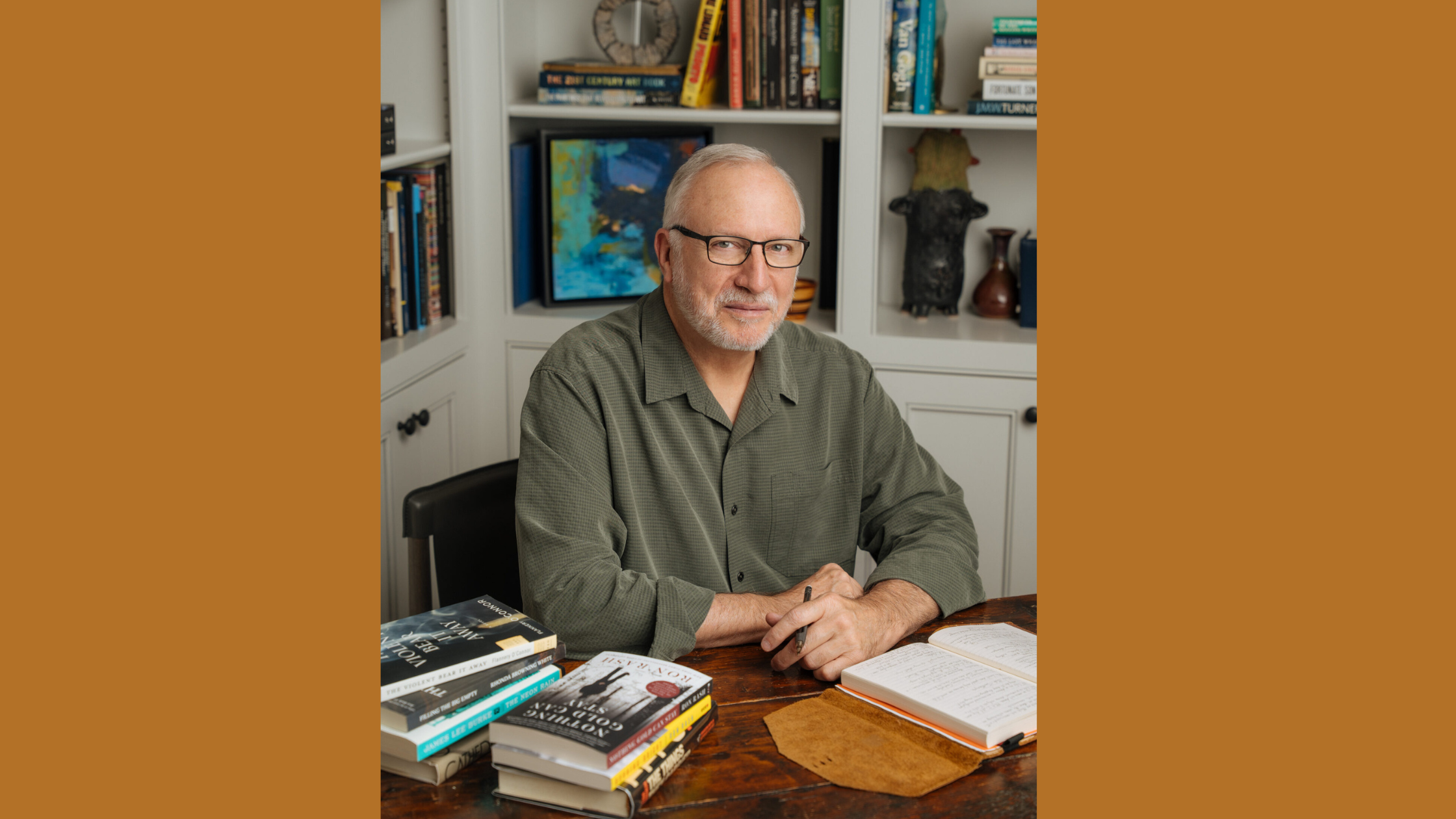
E. Davis Enloe’s debut novel Into the Night Woods plunges readers into the life of an irrepressible twelve-year-old in one memorable summer in 1961 North Carolina. Sixth grader Boyd’s healthy sense of mischief leads him to fantastic adventures, yet also frequently pushes him into conflict with the adults in his life. When he lands in a fistfight on the last day of school, his mother sends him to his grandfather’s farm for the summer as punishment. Yet Boyd doesn’t allow this change to upset his and his friend Roger’s summer plans: to explore the nearby woods and find the cave that has achieved mythic status in their minds. Meanwhile, Roger’s increasingly abusive father forces Boyd to acknowledge the limits of care his close-knit community can provide. A deeply moving coming of age story as well as a propulsive adventure, Into the Night Woods celebrates friendship, the deep bonds of family, and one boy’s steadfast pursuit of justice for his friend. Enloe spoke to us about drawing inspiration for his characters from family members, creating such a specific setting for his novel, and the role of perseverance in his writing career.
Boyd is such a memorable character: he’s adventurous, curious, and loyal, but there’s also a rage that underlies his sense of right and wrong. How did you land on him as the main character for this book?
I think I was looking for a way to present a story about a boy who is thrust into an adult world, but he lacks the skills and experience to navigate it very effectively. Part of the reason I picked that age was so he would be vulnerable. I wanted it to be before the hormones kicked in, so that there was more innocence. I wanted a kid who was somewhat of a rascal himself—very hard-headed and self-determined—so that he would get himself into trouble. And then I’d have to write him out of it. (laughs)
The events of 1961, whether it’s integration or Maris versus Mantle, prove integral for what’s happening in Boyd’s world. How did you pick this particular time period for the novel?
With this first novel, I wanted to be intimately familiar with the setting. I chose an era that I was raised in and lived in until I was eleven years old. I wanted to incorporate the essence of all those places—the railroad track, the lumber yard, the creeks, the school, and even the church—and people—the shopkeeper, the bus driver—into the stories. I wanted to be familiar with them. Plus, all those people, places, experiences had great impact on my life, so I felt like I could write into them deeply and authentically.
One of the really moving aspects of the book is the sense of community. It’s not only Boyd’s grandfather and his parents who are looking out for him, but the townspeople as well. Was that something that was top of mind for you in terms how the world is actually operating versus Boyd’s conception of it as an adolescent?
This surprised me about the book. I don’t know how consciously I was aware of this while I was writing it, but I wanted this to be about men who tried to do the right thing even if they failed. I’ve had a lot of women like the book, and they seem to tell me what I thought they would tell me, which was that their mothering instinct kicked in because they were worried about these two boys. A lot of women seemed to touch on exactly what you said, that they liked it because the men in the community were stepping up. I didn’t quite see that. I mean, I was aware that I wanted these men to be involved in the story, and I wanted them to struggle and try to do the right thing, but I didn’t realize that would be of such great importance to the readers.
Boyd has so many amazing relationships, but one of one thing I think readers will really respond to is his relationship with his grandfather, Grange, who is mourning the recent death of his wife. Both grandfather and grandson really seem to understand each other in a way that no one else in their life can. What went into developing this relationship between Boyd and his grandfather?
I was fortunate to have two really great sets of grandparents. Grange is probably more based on my father’s father than my mother’s father. They both were very devout Christians—kind, generous people. But Grange also was like my grandfather. He had a little bit of a blind spot about religion, that it can’t do everything and be everything here on earth. Sometimes you had to step from behind that desire to be good and spiritual and religious and do things that are very difficult. I had a great relationship with my grandfather. He lost his wife, my grandmother, at a relatively young age. I happened to be staying with him the summer after she passed. She passed in the spring, and I was there that summer. So that was very real.
Those scenes on the farm are so vivid, and you immerse the reader in the day-to-day chores of farm life.
That’s very real stuff for me. My mother was an organic gardener, and her parents were big gardeners, and I spent a lot of time with them. I’m proud of saying that I grew up thinking that everyone watched their grandmother chop the head off the chicken, and then would run around pretending to be that headless chicken, careening off wheelbarrows until they collapsed under the hydrangea bush. (laughs)
I wanted to also talk about the relationship that Boyd has with his uncle Monk, who seems in sharp contrast to Grange. Monk has a deep sense of right and wrong, and will often do things his own specific way. Was Monk based on someone in your real life?
He was based on an uncle I had, Horace. Horace was a rascal, but he was also very talented. In fact, he was a nuclear physicist and ended up working for Boeing, but he was raised right there in Spindale, another community in Rutherford County. He didn’t struggle a lot with moral ambiguity. (laughs) In fact some of things that are mentioned in the book, Horace actually did as a child. He was a strong personality. People gravitated to him because he was a very independent, but a very personal, fellow.
The heart of the story is Boyd and Roger’s friendship. Roger’s home life really forces Boyd to realize the limits of his community in being able to keep his friends safe. Can you talk about that friendship and how you decided to put Roger in the situation that we find him in with his dad?
I wanted them to be vulnerable and I wanted them to be in an impossible situation. I guess I created a dynamic where Roger defends his father, even as he’s a threat to his life, and Boyd finds it impossible to both try to protect him or get others to protect him without damaging their own relationship. It was a fascinating dynamic, but it added great complication to the story. I wanted the story to unfold in a realistic, honest, fateful kind of way. I didn’t want to save characters because I was fond of them. It just had to unfold the way things would naturally most likely unfold.
The book is an incredibly exciting adventure story that will remind readers of the adventure stories that Boyd is reading, whether it’s Treasure Island or Tom Sawyer or Where the Red Fern Grows. Were you thinking about this book falling into the lineage of adventure stories that Boyd enjoys reading while you were writing this?
I didn’t think too much about the adventure stories as I was writing it. I guess it just felt natural that these two boys, especially these country boys, would be out in the woods doing things. Of course, growing up, boys always talked about caves and adventures, crossing the trestle or discovering gold. I remember reading Where the Red Fern Grows and also Ivanhoe. It seemed to work really well to be able to tell these stories and to evoke memorable things, experiences I had that I could then write a story underneath—the emotional story of Boyd being anxious and worried about his best friend. How he’s frustrated with people and institutions that don’t step up. It seemed like a natural kind of scaffolding to write a story with.
I was looking at your blog on your website, and you write very movingly about how you came to writing. Can you talk a little bit about your journey to becoming an author?
When I retired full time from the National Guard, I was fifty-five years old. I always knew that I wanted to write creatively. There wasn’t a lot of need for creative thinking in the military (laughs). I was fortunate to be able to go back to school. Even today, I’m not quite sure why I studied poetry. I had a natural interest in college and always felt like I didn’t quite get to read enough about it then. I was fortunate during my MFA program at Converse College to meet Earl Smith, who the book is dedicated to. He was the editor of Shenandoah magazine. He was a very narrative poet, the way my poetry is, the way James Dickey’s poetry is, but he was also a short story writer. At some point, I worked really hard, got some poetry published, and decided I’m going to try to write a short story. I’m not sure why I had that thought. As it turned out, I realized fairly quickly that I’m a better short story writer than I am a poet.
So I worked real hard. Somewhere along there, I was able to meet up with Lee K. Abbott, who is one of our greatest short story writers. He just retired as the Creative Writing director at Ohio State. I went to Kenyon College’s summer writing program and met him there, and he was available to work with me individually. He helped me tremendously, understanding how stories had to be put together, how they had a certain flow. He called it “stuff”—the interior dialogue, narration, and exposition—and taught how there’s a flow to all that, but also that the flow has to be disrupted. It has to be done in a way that’s conducive to a good story. Somewhere along the line, I remember reading a Ron Rash short story and being so frustrated that I threw the book across the room and said, “I’ll never write another short story until I can write one as good as this.” I realized soon after that I might not ever write one that good, so I had to get busy. (laughs)
I just wanted to stay focused on craft, and when the people that I respect, like Lee and Earl Smith, when they say it’s ready to publish, then I’ve got to publish it. I remember Lee telling me, “Bravo, this is a breakthrough. You’re ready to publish this.” From there, I think it just naturally grew to the short story that this novel is based on. I went to a workshop with Andre DeBus III down in Cadence College, St. Petersburg. He read it and said, “This is not a short story. This is a novel.” And I was like, “This is not a novel. Andre doesn’t know what he’s talking about! (laughs) So I put it away for a year or two and just didn’t see a path forward. Then I guess one morning I must have awakened and said, “Oh, I see what he meant.”
I think he was saying that this is a really rich, great setting with lots of good characters. There’s lots of opportunity to expand. I tried to remember, above all things, to persevere. I remember reading an essay that came out in the eighties—it’s probably more relevant now than ever—called “Writing In The Cold.” The essence of that essay was you have to persevere. Even if you get an MFA, and you get a lot of attention and affirmation from your instructors, at some point that’s going to fall away, and you’re going to have to go sit in the cold and write all by yourself. You’re going to have to persevere. That’s what I did. I Just stayed patient. Well, I don’t know if I was always patient, but I did persevere. (laughs)
Tags: E Davis Enloe