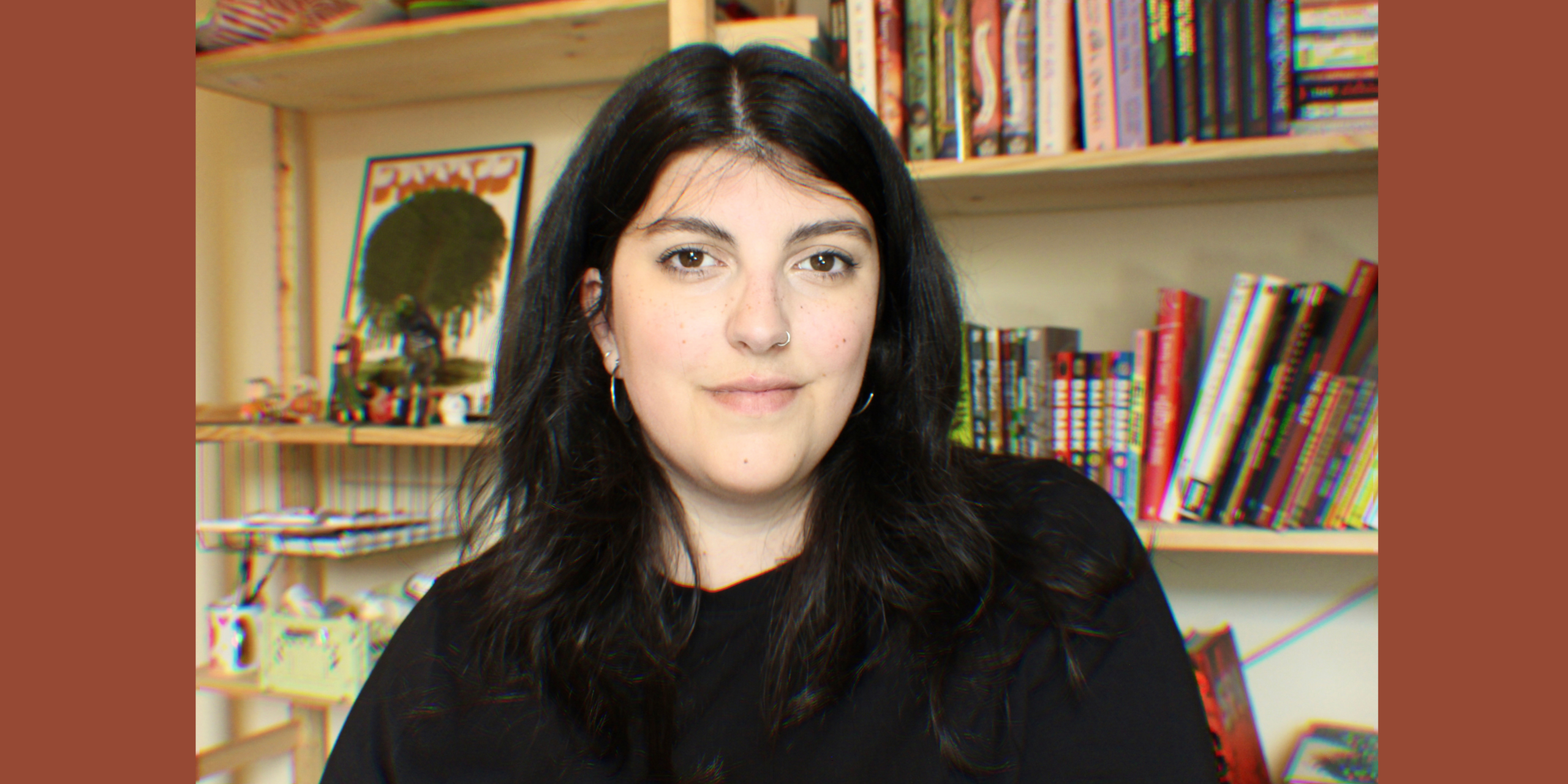
Rennie McDougall On How Social And Historical Forces Molded Twentieth Century Dance

Rennie McDougall‘s Nonstop Bodies: How Dance Shaped New York City gives readers a thrilling new perspective on twentieth century New York City by investigating the different choreographers, dancers, and dance movements that flourished there during that time. McDougall guides the reader through various dance movements, from the marathon dances of the Prohibition era to the Lindy Hop to the Rockettes and beyond. All the while, he catalogues the dense web of lineages that developed among specific dances and artists, allowing readers to see relationships among disparate dance forms that might not be immediately apparent. McDougall also dives into how social and historical forces directly molded the evolving dance forms, and the unique position New York City held to create countless connections between dancers and choreographers not only in the moment, but across time as well. Critics have heaped praise on the book, with Library Journal hailing it as “a love song to dance in all its forms and the city that invented and perfected so many styles.” McDougall spoke with us about taking a different approach to dance history, bringing readers into the immediacy of dancing, and how the texture of the dancers’ lives unconsciously affected the evolution of dance.
Can you talk about the project of the book? What was your mission when you set out on the research process?
I wanted to explore dance history in a different way, and specifically to disrupt the typical idea of dance lineages that look like a family tree—say Martha Graham to Cunningham to Judson Dance Theater. Instead, I wanted to look at how all of these different interactions in New York City create this intricate network of lineages. I thought of this as a history of New York first and of dance second. I was trying to tell the story of these major social liberatory movements of the twentieth century—the civil rights movement, suffrage, feminism, gay rights, workers’ rights—telling all these stories through the lens of the different dances that emerged from the city.
In your opinion, why does dance lend itself to explore the social dynamics of community and place in a way that other art forms might not be able to?
I think there’s this interesting bleed with dance, between the art form and the social practice of it. In many instances, these ideas are taking place in an embodied way, in the social practices that are happening on dance floors before they necessarily get to the art of dance, like choreography. That’s one way that this makes this an interesting lens to look through it. And this book is putting concert dance or modern dance and ballet side by side with social dancers, and looking at those histories, their parallels and how they interconnect. But also, I think a lot of the stories of the twentieth century are about physical liberation, or about liberation as tied to our bodies and the markers on our bodies. It makes sense to explore the emergence of those ideas and those movements through embodiment, and how those ideas show up in embodiment, which is where it’s showing up in dance.
You come from a professional dance background. Can you talk a little bit about your own relationship with dance?
I was a professional dancer for about ten years. I’m originally from Melbourne, Australia, so I trained there. I started dancing when I was probably six years old, and then trained pretty seriously. I went to a high school for dance training, and then went to college to study dance. I worked in Melbourne as a contemporary dancer for Lucy Guerin and Phillip Adams and Jackie Booth for about six years, and then I moved to New York in 2015 to dance with Juliana May, who’s a choreographer in New York. It’s been part of my experience since I was very young. I started writing about dance in Melbourne, when I was reading a lot of writing about the dance happening in Melbourne that I just thought wasn’t particularly great. So I thought, I’ll give this a go.
How did your perspective as a professional dancer affect your approach to the history of dance?
Just on the level of writing. I tried to bring out what the immediacy of dancing is like in each of the chapters. Because especially for history, and especially writing about some of these dances that are over a hundred years old, we can put a nostalgic lens on it or lock it in the past. Something I really wanted this book to do was put the reader in the time, to bring up the contemporariness of these dancers. Obviously, film is great for seeing dances like the Lindy Hop and swing dancing. But when you look at old film footage, it immediately triggers in your mind “this was in the past.” Whereas writing about it, you can bring the reader into the now, and bring to life the energy of these dancers and what it meant at the time. So being a dancer and having that kind of physical information in my body, I’m trying to bring the reader into that relationship with the dances as they’re happening, bringing out the intense nowness of them and the deep embodiment of them.
Something that struck me about the book was how some of the dances were such a leap forward in terms of what the audiences were used to seeing. People in the audience weren’t always aware of how groundbreaking they were watching was. What was your experience in terms of researching how someone like Isadora Duncan was first perceived by the public?
I was really looking for those moments in dance history where there was some kind of shift that heralded in some new idea or moment that audiences initially couldn’t understand or didn’t know how to deal with. Those felt to me moments to focus on. There’s a very specific quote in the book that I keep coming back to from Jill Johnson, who was one of the critics at the Village Voice who covered the Judson Dance Theater moment. She was talking about what they were doing in relationship to what modernists like Martha Graham were initially doing when they first started creating work, which was about experimenting with form and trying new things and pushing dance into a new space. But as history remembers these figures, they get mythologized, their dancing or their technique becomes institutionalized, so that it gets very locked in and familiar. We forget that kind of initial experimentation. Throughout the book, I’m trying to remind readers that the unfamiliar is where these new and exciting things occur with dance. I think dance has this itch to define, “this is dance, this isn’t dance,” to really codify what is the form and what isn’t the form. I wanted people to undo that thinking a little bit when looking at performance, and that so many of the big moments in dance history were initially greeted with disdain, confusion, or dismissal.
Hearing you talk about people codifying what dance is or isn’t makes me think about your chapter on the marathon dancers in the late 20s and early 30s. I found the whole conversation around marathon dances fascinating, in terms of the debate over is what they’re doing dance when the dancers are supporting someone who might be on the verge of unconsciousness for hours.
I liked the idea of putting certain things in this book side by side that would maybe offend specific tastes. There’s an entire chapter on the Rockettes. A serious dance history might think the Rockettes maybe doesn’t deserve the same amount of critical examination. But putting the Rockettes side by side with Martha Graham and Balanchine draws out the ways that we value or don’t value certain things about dance. Similarly, with that dance marathons chapter, it’s not dance as an art form, necessarily, but it’s about a social practice. It’s about the reasons why these people were approaching dance this way in this time, and what it meant to them. That says just as much about the time, the people, and the city as the giants of dance like Balanchine or Jerome Robbins or Alvin Ailey.
You write in the introduction about how the book is trying to shift the thinking that the genesis of a dance was from a specific choreographer, and to help the reader understand how a lot of these dances were created collectively by a community of dancers. Was that something you were aware of before, or was that something you discovered in your research?
It was an idea that I had when I started the book of exploring it through that lens. Obviously, there are figures that, individually, carved their own path with dance or found new territory. Graham is a great example, because she was a very singular artist. But the group of women that she was working with really had to give themselves over to her direction in order to get to the place in their own bodies to create the work. It lived in their bodies. I did a lot of my research at the New York Public Library for Performing Arts at Lincoln Center—bless them for filling a million materials requests. Going to the oral histories of those dancers—like Sophie Maslow, Gertrude Sher, Anna Sokolow—where they talked about the process of working with her in those early years, and what it took from them and their bodies to get to the work. Because, of course, they have to articulate it on stage for it to exist. So even in that sense, there is a kind of communal element to the creation, even though it is, of course, a vision of one person. That’s different to something like the Lindy Hop in the Savoy Ballroom, which was a dance that was created socially. It was the creation of all of these different people, building on it and filling it with improvisation. So that’s a more exact version of a kind of communal creation.
I found that chapter so moving in the way you write about how World War II changed the Lindy Hop, the evolution from jazz to bebop, and what that said about where the country was in relationship to civil rights.
It’s the way that living and dancing rubbed up against each other so closely in that instance. All the textures of these dancers’ lives just found their way into the dance and changed it unconsciously. I find that really unique about dance, that it has the capacity for it to be shaped that way, because it’s embodied.
One of the really powerful things about your book is that you show these vaunted historical figures as really human, and a lot of times that involves showing how they could be very progressive in one area of their lives, while also having a real blind spot to certain issues, such as race or gender. What was your approach to depicting these artists?
I definitely had that in mind of wanting to tell them as a human story. Just to step back before we get into it, the book covers so much ground. It’s a really broad, sweeping, almost bird’s-eye view of this history of New York. I felt like in each chapter, it was really important to zoom in and focus on specific individuals. That’s even within the context of the social dancers like Frankie Manning in the Savoy Ballroom. Rather than reading a dense history, there is a kind of narrative nonfiction element to it. There is some kind of story told through these different individuals.
In terms of these big figures—Martha Graham, Jerome Robbins, Balanchine, Alvin Ailey, Yvonne Rainer—I did want to, of course, honor the incredible artists they are. Part of that is looking at the tensions or the questions that they had at the time that were coming out in their work. A lot of that then reveals their humanity and their—as you say—maybe blind spots, or their biases or their resentments. All of those things that make us human are then also what make them great artists, and they’re navigating those things.
Jerome Robbins, I think, is a specific example with his episode where he was in front of the House Un-American Activities Committee and named names after being, when he was younger, affiliated with the Communist Party. A lot of people in his life saw that as a massive betrayal. But I think it tells us something about him and his ambition that he felt such a fear that his career was about to be taken away from him that he did that. It’s those stories, I think, that actually get us closer to both the artists and the work that they made.
Finally, what role the library has played in your life?
I mean, just with this book alone, the library, and specifically the New York Public Library of Performing Arts, has been essential. The work that they do, the archives that they have kept, the help that they provided, in terms of tracking down specific materials or just suggesting related materials, have been the backbone of this book.
The idea for this book really started because of work I was doing in the library. This book started with an article that I wrote. I wrote it in college, but it ended up getting published in The Village Voice, one of the last issues. It was about dancers in Harlem that had been dancers at the Savoy Ballroom in the 50s. They were still living in Harlem and they still danced together. It was a history that I have to admit I wasn’t totally aware of, which I felt quite embarrassed about being a dancer, and the significance of this history. When I was working on that piece, I started going to the archives to research this venue and the dancers. it just sparked my imagination, just seeing these old materials. There’s a video that I watched—this actually is a real catalyst for the book. There was a video I saw at the New York Public Library for the Performing Arts of one of Mura Dehn’s dancers. It was an old video on eight-millimeter film. I describe this dancer, this woman who is from the Bebop era, in a passage at the end of the chapter. Watching her, I was so struck by how it looked so similar to the work that Deborah Hay does. They’re worlds apart, but all of the information going on in the dancer’s body, about containing and negating the fullness of the movement, redirecting her natural pathways, turning her back on the audience, and all of this information that was going on, I was just like, whoa. What is this? How is it that this dancer has, to my mind, this relationship to this other thing that is worlds apart? That was such a big catalyst for asking what are all these lineages that connect us through dance and seeing that New York City is so primed to make millions of these connections in a way that we haven’t recorded yet.
I love that you talked about that that moment, because that moment in the chapter is so vivid in my memory.
It might be that clearest example of all of the social and political ideas and events that are happening around that time culminating in the dancer’s physicality. I think it’s probably the clearest example in the book, that articulation. Everything in that chapter that’s led up to what we know about this period and this time and this place just living in the dancer’s body and coming out.
Tags: New York City, Rennie McDougall, US history