“Let’s Get Weird” – Beck Kubrick on Their Chilling New Graphic Novel
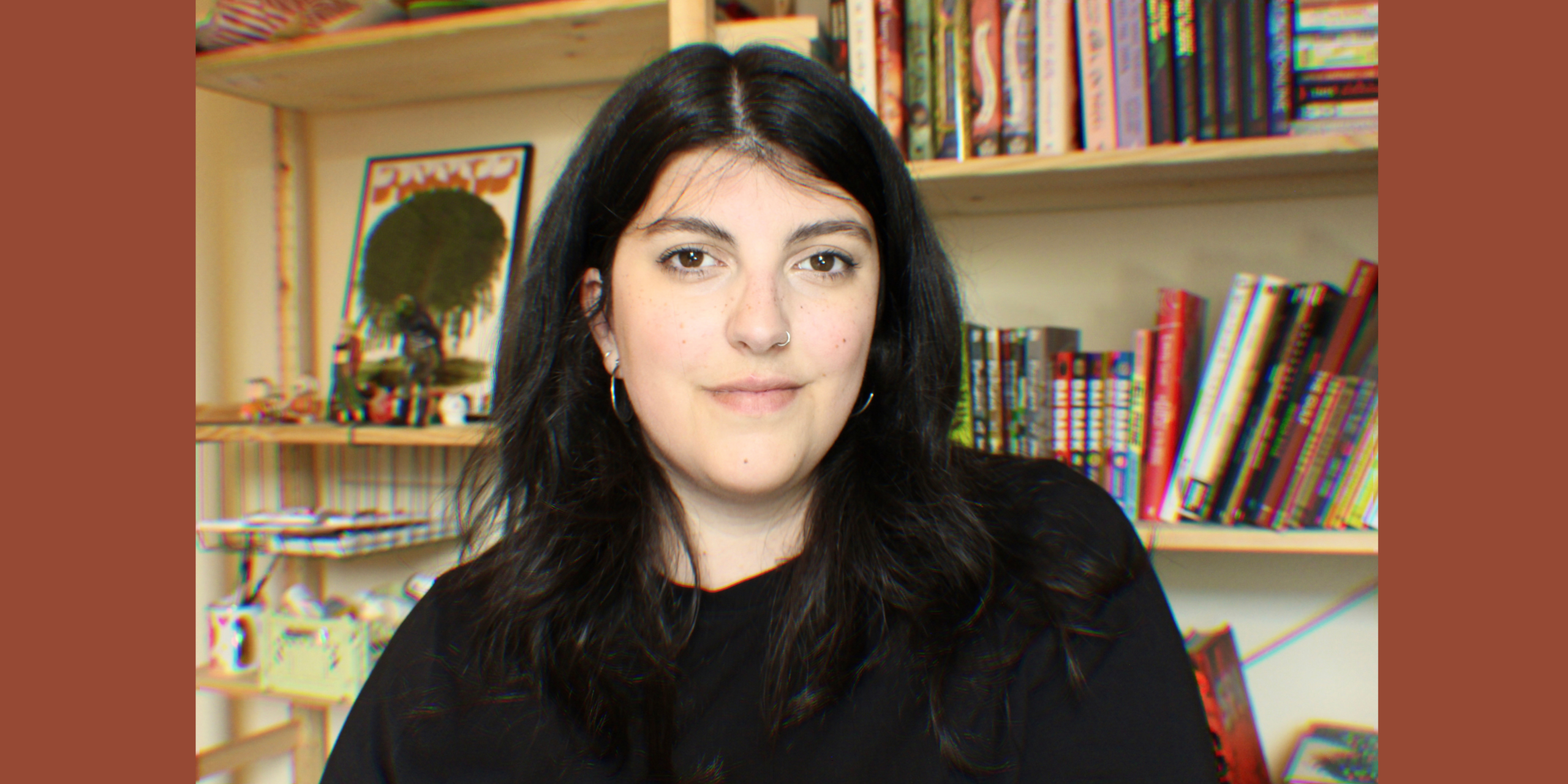
Despite growing up in the bucolic New England town of Clossdale, Ash Hargreeves lives under a shadow of suspicion. When Ash was a baby, her mother died a fiery death soon after police discovered she was The Clossdale Killer, a serial killer whose victims were all popular high school girls. Years later, when five of Ash’s classmates disappear and townspeople discover dead bodies in the forest, all signs point to Ash as the most logical suspect. Over the course of one terrifying night, Ash teams up with her only two friends, Cassie and Jamie, to discover the real culprit, guided by their mantra WWJLCD (What Would Jamie Lee Curtis Do?). Laugh out loud funny with surprising twists, Beck Kubrick’s Dead Girls is a taut thriller that deftly upends the slasher genre. Critics have praised the graphic novel, with Kirkus Reviews hailing it as a “chilling slasher that effectively explores legacy, identity, confronting the past—and refusing to be defined by it.” We spoke to Kubrick about constructing the elaborate mysteries Dead Girls, playing with the framework of horror, and the “terrible feral” high schoolers at the heart of the story.
Dead Girls is so exciting and unnerving. I was curious to hear you talk about what was fun about exploring the world of a slasher film in a graphic novel. What are the things that you can do in a graphic novel that maybe you can’t do in a film?
It was a little bit selfish, really. I love slasher films. I love horror, I love horror comedy, and I also love YA. I kept referring to Dead Girls as like the terrible girls in terrible situations of YA books, where they do terrible things, you know? I felt like a lot of graphic novels didn’t really have the same bite in their YA that the prose novels got. My main thing was I just wanted to bring that to graphic novels, to a visual medium. I understand logically that you can write certain things on a page but maybe you can’t show them, so it was kind of playing with that.
And then I think horror just has a lot of iconography. There are so many tropes, there are so many fun things I really wanted to play with. Film is a very collaborative medium. You’re restricted by budget and people and time and a million things. Whereas with a graphic novel, I can do anything. The art style changes, things get a little weird and surreal. We can play with the style and get a little weird edge-of-reality feeling sometimes.
I wanted to ask about that art style changing because that was so such an exciting part of reading Dead Girls for me. When things get really intense for one of the main characters, she goes into almost this fantasy land, which is represented through a shift in the art style. Was that something that you discovered along the way or was that something you knew that you wanted to play with when you started the project?
It’s definitely something that I like in books and I like in my own work. I started doing art through realism: pencil and oil painting. I’m being stared at by some of my giant oil paintings right now. It’s definitely a thing I like to play with. I still work traditionally. With four inking, there’s a lot more opportunity for me to play with things like that as well. I really like the tactile feeling.
it’s more common in manga to kind of play with art style. There’s a great show called Manben, where they show behind the scenes with manga artists. One guy—I can’t remember his name, it was a while ago—was saying he wanted the scene to really hit, so he did it in pencil instead of the usual inks. That gave it a different ethereal feeling. It’s definitely something that I really like in work. I like it in films as well, when the art style changes, like a Tarantino when there’s something that’s animated or when you dive into the character’s feelings and that changes the world around them. So I found it along the way. I hadn’t written it into the script necessarily, but it just made a lot of sense. And also, I wanted to have fun creating the book, and hopefully that translates into the reader having fun reading it.
The first time it happened with Cassie it was such a delight. It was so fun to get this insight into how her mind works.
She’s sunshine and rainbows and unicorns. (laughs) I wanted my characters to feel like real people with wants and needs and desires and not just be horror tropes. I didn’t want it to be “she gets to survive because she’s a good girl,” nothing like that. But they’re all still a little exaggerated. Everyone’s a little kooky. I kind of have no real interest in an incredibly grounded depiction of reality. (laughs)
I wanted to talk about the three main characters at the heart of the story, Ash, Cassie, and Jamie. With Ash, you’re really playing with the trope of the final girl. How did you land on Ash as the perfect character to embody that kind of persona?
I really wanted to write a story, like I said, about those YA terrible girls who do terrible things in terrible situations. I wanted her to be a little feral, really angry. I wanted her to feel like a person I know, people I grew up with. I wanted her to feel like a hero who isn’t typically allowed to be the hero. Her journey isn’t about her learning to necessarily be soft or more feminine or any of those things. The journey is she’s really good at being angry and that’s a great skill in this story. (laughs) She’s a bit rude, she’s a bit abrasive, she’s a bit off-putting, and that’s not a bad thing, because sometimes you just are.
Jamie has Ehlers-Danlos Syndrome. I loved how casually that’s discovered by the reader and the many ways that’s integrated into the storyline. How did that aspect of her character come about?
I have hypermobile Ehlers-Danlos syndrome. It’s a spectrum disorder, hypermobility. In thinking about how I wanted to take all these horror tropes and make it in the modern day, it just made a lot of sense to me. It was a little bit selfish. (laughs) If I was running from a killer, I would probably roll my ankle. I’d need a second, and that would be so annoying! And then I thought, “That makes sense for the characters.” I wanted them to feel like real people with lives outside of this. That’s just a very real part of my life. Sometimes it’s like, “Whoops, I did something, my elbow’s wrong now.” When I realized, “Oh, she can fight using her mobility aids,” that’s really funny. I wanted them to feel real. They’ve been friends forever, this is just such a given. It didn’t have to be a big thing in terms of we have to explain it, she has to be a beacon for representation. She’s also a terrible girl, a terrible feral child, who just also happens to have this condition.
You pack so much into this novel, whether it’s the overarching mystery of who the killers are, the relationship of the three friends, and the lore of the town. How did you decide what to put in and also what you had to leave out?
There was definitely a draft zero, where I just vomited everything onto the page. It went a little too in-depth on some things. It was really just about finding the core of the story and what’s the most interesting part. It also was about making sure everything relates back to Ash and the girls and is central to what they’re doing. My process is also very vibes-based, you know? I know the hero’s journey, I’ve read Save the Cat, I know the structures, I know how to do it, but also I subscribe to David Lynch’s theory on the unconscious. He talks about how there’s this ocean within everyone that’s your experiences and memories. You sort of catch an idea, like you’re catching a fish, and you just have to intuit it and go with it.
It sounds very woo-woo, but it’s also funny, because R.L. Stine—obviously an amazing horror writer—he said, “I don’t write from the heart, I just write to have fun.” But the way they describe their processes are basically identical. They both think about things and let their brains whir in the background. And it’s very that. I know I need to have a resolution, I need to answer these mysteries, but it’s also just like, “I know how to do this, I hope you enjoy it, I hope it’s fun.”
Without spoiling anything, I wanted to ask about a love story subplot in the book. It was very sweet to see romance unexpectedly bloom between two of the characters. I’m not too familiar with the horror genre, but that doesn’t seem to happen a lot in horror films or horror novels, where there’s space for two characters to discover their feelings for each other while running from a killer. How did that relationship spring up, and how you were able to fit that into the book with everything else that was going on?
That developed naturally. It just sort of happened as I was drawing them on the page and they were having all these little interactions. Like I said, I try to make them feel like real people, but sometimes you are just the background characters. You are just Ash’s sidekicks sometimes. They just kept having all these little moments. I always want to imbue stuff happening, and then I thought, “This makes sense.” Also, in our brains, fear and how we experience being scared is actually really close to love. It made sense. There are these moments where you’re grabbing your friend’s arm because you’re terrified, and suddenly things are put in perspective. Typically, characters go into horrors, especially slashers, as a finished version of themselves. They’re a trope. They’re the smart girl, the mean girl, the bad boy, or whoever they are. I just saw this really natural opportunity for some development and some growth, for characters learning things about themselves while this nightmare goes on. Humans always experience the feeling of, “Oh, I’m having an existential nightmare, but I also have to pay my bills and go shopping.” (laughs) Then teenagers, teenage girls especially, they’re experiencing, “I’m growing up, my body is changing, my life is a horror show, puberty is a horror show, and also I have to pass maths. I’m an adult and I’m a child. I don’t understand what’s happening, and I’m stuck in this in-between.” I thought that these two would be able to navigate this. I thought they’d be not fine, but kind of fine. I thought they’d be the perfect people to do it.
You live in Manchester, and this is a book that takes place in somewhere in New England. Can you talk about why you chose to set it in the United States rather than England? Is there something about the slasher trope that can only exist in the United States?
I don’t think that it only exists in the United States, but I think it’s kind of founded there. When you get to the core of it, I think a lot of it exists there. I’ve read so much theory about it. I love researching things and getting way too into a subject. But basically, Carol J. Clover, who coined the term “Final Girl,” talked about how in the 70s civil unrest, white flight, all of these very American things—obviously happening in different ways and having different names everywhere—prompted the Final Girl. She lives in a wealthy suburb and something’s attacking her. “Oh no! Now the suburbs aren’t even safe. Do you know where your children are?” That kind of thing.
I think setting it in the UK would have been subverting it in a different way. It would have changed the story. There are just certain tropes and certain things that would be very different. We have British slashers, but generally British media is more like realism, but they can get a little surreal, they can get a little weird, because I think a lot of British media is made in response to American media. Generally it’s a lot drier, there’s just a different vibe to it. I just think it would have been a different story.
It seems that horror is having a big moment right now, with shows like Widows Bay and movies like Teenage Sex and Death at Camp Miasma examining horror through different lenses. Why do you think horror is having this particular moment right now?
I think horror has traditionally been a bit of an underserved genre. It’s typically been thought of as B-movies, lower budget, and kind of silly. But there’s so much to explore. It’s so rooted in tropes and ideas, and there’s so much to play with. You can kind of go, “Here’s the setup. You know these characters, you know these tropes, now let’s get weird.” Like I said before, horror is generally a response to societal stuff, and we’re experiencing a lot of stuff right now. I think it’s a great time to explore that. Horror, especially horror/comedy, is a genre that really understands that duality of how we’re beings who know about our mortality and existence—and we have to think about these things—but we also have to do really mundane, boring things.
Also the horror genre has been so historically one-way. Even with Final Girls, the Final Girls were symbolic. They were innocence, they were purity, they were these things against the Big Bad—and insert whatever you want into the Big Bad. In Halloween, it’s a guy in a William Shatner mask, but he’s also representing this sort of civil unrest and all of these really hard to hold on to ideas. It’s a lot easier if it’s a guy with a knife. That’s something a lot easier to be scared of. There’s a lot of room for people who haven’t historically been allowed to tell these stories, share their perspectives, get a little more nuanced, and have a little more fun with it.
There’s been a rise in coming-of-age and good-for-her films as well. Gender and horror are obviously so linked with Final Girls and all the tropes. There’s so much you could talk about, but I think just having female filmmakers and filmmakers from different backgrounds—diversity in any sense—helps. Because horror has such a framework, it’s so much fun when someone can play with it. You can give everyone the exact same set-up, and everyone will make wildly different stories, and it’s so much fun. So yeah, it’s kind of a sad answer, because it’s like, “Oh, the world’s messed up, so we’re making more messed up films.” But it’s also a great answer, because everyone’s been looking around and sort of going, “Hey, now we’re getting media that kind of represents that.” And you can also only tell the same story so many times. (laughs)
Finally, what role has the library played in your life?
I love the library. I grew up like across the road from my public library and we would go there on school trips. I would go after school. There were so many good things there. They had a printer when no one had a printer. It was amazing. I did National Citizenship Service—it’s a thing that teenagers do here, it’s a very British thing. A big part of it was getting kids out into nature, kids out into their communities, kids experiencing things and giving back. All of those meetings were held at the public library. Libraries feel like the final good thing that we have. You can go here, you can read a book, and isn’t that amazing?
Tags: Beck Kubrick, graphic novels, horror genre, YA Books