“I Want You To Stay Up Late To Finish The Book” — Juno Dawson On Her Chilling “Survival Show”
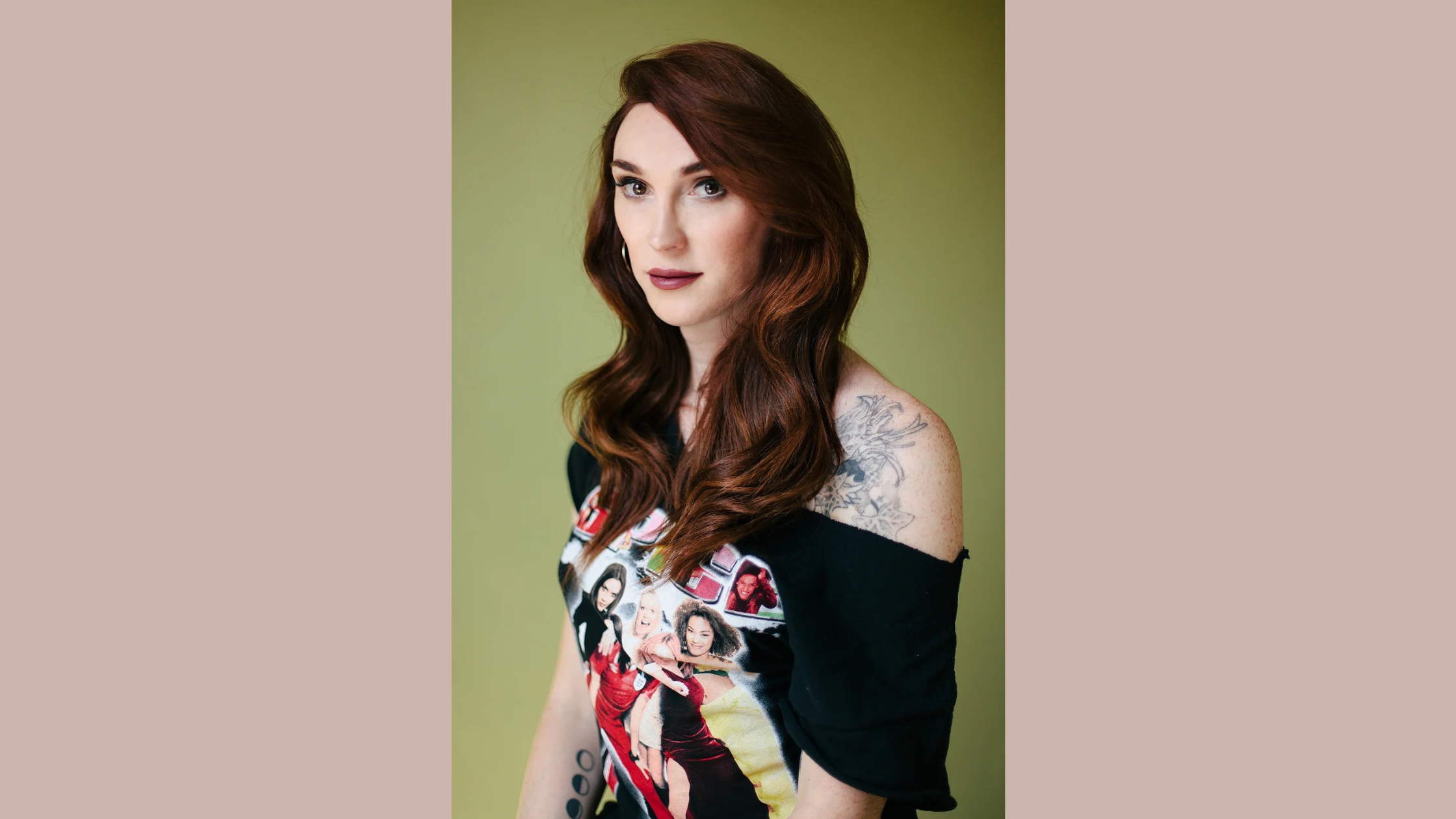
Juno Dawson’s Survival Show begins with an irresistible premise: a reality TV show where contestants vie for one of five spots in a band, where each week the lowest-ranking contestant gets executed on live television. Dawson centers the book around Taryn Beck, a gutsy seventeen-year-old who’s survived a climate disaster and war and now lives in a refugee camp with her father and critically ill brother. When Taryn lands a chance to audition for Starmaker, the television show that has become a global phenomenon and launched past winners to superstardom, it seems like the best opportunity for her to provide her brother with desperately needed medical care. Yet when she begins rehearsing with her fellow contestants, Taryn must confront the challenge of collaborating and competing with contestants whose success could mean her death. Intrigue and romance quickly follow, and Dawson balances the gloom of her dystopian setting with a dark wit. Dawson previous books include This Book Is Gay and Clean, and critics have heaped similar praise on Survival Show. In their starred reviews, Publishers Weekly wrote, “This chilling, satirical dystopian adventure defies expectations,” and Kirkus stated, “Fast-paced and heart-wrenchingly suspenseful, this work combines the glitter, drama, and cutthroat competition of the pop music industry with the looming threat of death.” Author photo courtesy of Eivind Hansen.
Survival Show is a thrilling adventure but it’s also such a sharp examination of reality television and our relationship to it. What was your relationship to reality TV before you started writing this book?
I’ve really run the gamut. I got down to the last fifty for Big Brother IV when I was twenty-one. I applied to go on Pop Idol. I read Gerry Halliwell’s memoir. Rather than seeing it as a cautionary tale, I thought, “Oh my God, I want to be famous.” (laughs) I’ve come to understand that the desire to be famous comes from, dare I say it, not experiencing enough unconditional love in childhood. I think it’s for people who have perhaps questioned how conditional the love in their life is. As a queer child, that’s something that I think was definitely true of me, because I thought if my parents knew who I really was, I might be rejected. So there was something about the notion of being worshipped or adored that was very appealing. I wouldn’t need to be loved because I would have fans. I think there was a bit of revenge in me as well. I’d had such a horrible time at high school that I needed that external validation. I was like, “I’ll show you. One day I’ll be the biggest person to ever come from Bingley!”
Reality TV was in its infancy at that point. But given that I was a working class queer kid from the north of England, all of a sudden there were these doors open that had never been there before. Like you didn’t need the Disney Channel or The Mickey Mouse Club anymore, because you could just apply to be famous. You could just enter yourself, and I always backed myself. I really did think like Adore Delano. I thought I was a star. I was like Pearl. “I’m a star! I’m a star!” (laughs) So I applied for a number of reality shows, but then over the naughties and the tens, I think we realized that reality TV was a machine. Had I got Big Brother or had I gone through Pop Idol, my life would have been so different. And thank God I didn’t. You know, every day I’m grateful that I wasn’t selected for Big Brother.
Taryn’s such a compelling character for this story, because it seems she has experienced that unconditional love that you talked about. But she’s also got a brother who is in need of medical care and the talent to earn a spot on this show. Can you talk about how you created Taryn in terms of what made her the perfect character to go through this journey that you send the the group on?
I think the thing that Taryn and I had in common is that we both grew up in poverty. I knew that I wanted a comfortable life, but I was happy to work for it. And I think Taryn is as well. I perceived quite young that maybe I did have some talent when it came to writing, or certainly creating, and I had that drive and that self-belief. That forms the basis of Taryn’s character as well, which is she knows she’s an amazing singer. She always backs herself. There’s a risk when you’re writing a YA novel that it could come across as arrogant. But then also I’m very happy to see young women back themselves all the time and to actually earn their success.
But I also think there’s a lot of Katniss Everdeen in Taryn. When I sat down to write this book, it was because I wanted to experience that thrill I had the first time I read The Hunger Games. I think “painful” is a word that I always used for Katniss. If I’ve borrowed one thing from Katniss, it’s that sense of sacrifice. Self-sacrifice is a very tried and tested way to get an audience on the side of a main character, but at the same time, there’s a spikiness to Taren that I quite like. She’s savvy. Like me, she knows the rules about TV, and she’s playing the game. She’s not that girl in a YA novel who’s like Little Orphan Annie stepping into a world that she doesn’t understand. Taryn does understand. She knows how to play the game.
One thing that I found striking about Taryn’s journey is her realizing that her talent is not simply an innate gift that was handed to her from above, but that it’s something she has to work at and cultivate. How did that aspect make its way into into her character?
Well, this is potentially controversial, but one of my bugbears that has risen out of social media is this notion of identity. I’m a millennial, and I was always raised with, “Well, what are you good at? What is that thing you’re going to be good at? Find that thing you’re good at, and then you work at it, and you get better at it.” Whereas now, and I think this crosses the political spectrum as well, young people seem really obsessed with labels, like “what are you,” not “what can you do.” I wanted to put that in young people’s minds as well, which is ultimately where you will win in life is what is your skill set? What are you good at? But also, none of us are born gifted. Maybe if you are built like Michael Phelps, with his freakishly big lung capacity or whatever it is, you might have some sort of destiny towards something. But ultimately, it’s going to be hard work. That’s something we explore in book two as well, which is about just how much hard work being an idol is. It’s not for everyone.
I wanted to ask you about the tone of the book, because it’s very dark, but it’s incredibly funny throughout. There were multiple moments—whether it was the depiction of the show, the online discourse around the contestants, or just Taryn navigating life—that caused me to laugh out loud. Can you talk about developing that dark comic tone for the book?
This book is me sort of reintroducing myself to an American audience. That is very me, that’s my sense of humor, and that’s my writing. Obviously I’ve been publishing YA novels in the UK and Europe for ten years, and you would kind of expect that dark humor. But I’m very mindful that for a lot of readers in America, Survival Show will be the first thing they’ve read of mine. But also something I’ve learned along the way is whatever you write you have to bring yourself to it. As much as I love Divergent and Hunger Games, I’m not Veronica Roth and I’m not Suzanne Collins. But similarly, and this has taken me a really long time to realize this, they’re not me. Suzanne Collins could not write Survival Show, because that’s not her. That’s not her style to have that sly, sort of offbeat humor. I think it’s a very British thing. I think it’s a very British, gallows humor. Even in the worst of situations, someone is going to say something wildly offensive. And I love that about the British sense of humor. I hope North American readers get the humor, but it remains to be seen. What I say to writers is always bring yourself to the table. If I was to sit down with five other writers around this table and we were all given the same brief, you would get six very different novels if every writer committed to pouring a little bit of their DNA into the book.
That element of levity seems so important in terms of how awful the characters’s circumstances are.
There is some really dark stuff in this novel, and I thought when I was writing that it wasn’t. But since then, people have said, “That’s really dark,” and I’m like, “Oh yes, I suppose it is.” (laughs) That’s kind of the point, you know, which is this is a TV show where girls are being murdered on prime time television, but they are made to do it in a way that’s pretty and aspirational. That’s reality TV. Young women are being sent out to die, metaphorically, on reality TV every season of Love Island. Somebody is going to get that villain edit, and what’s that girl’s life going to be like now after she’s been called a slut and a whore on the internet for six months?
One of the pleasures of reading Survival Show, and one of the elements that kept me turning pages, is the various mysteries woven through the plot. Many of the characters have secrets that they’re hiding, and there are connections that are uncovered that aren’t apparent at first glance. Were those mysteries something that you had in mind when you started writing the book, or were those elements that you discovered along the way?
When you’ve got ten girls in the final and ten sort of seventeen-ish aged girls, how are you going to distinguish them and give them each their own little moment in the spotlight. When I was reading as a teenager, I was a big, big fan of Point Horrors. They were like R. L. Stein. I loved them, and they were really, really good. I’m a very plotty reader. I love a vibe, but I do need some plot. When I write young adult fiction, I’m always writing with this notion of this thirteen-year-old girl. It’s great if adults are reading my books as well. I love that. But I’m always like, how are you gonna get a thirteen-year-old girl to put down the phone, you know? So I think by deploying little twists and turns, that just makes for a good reading experience. I love a little cliffhanger, there are lots of little cliffhangers throughout. The phrase “page turner” can be used as a bit of a pejorative, but I take that as a huge compliment. I actively want you to turn the page. I want you to stay up late to finish the book.
I’d love to hear you talk about creating this world that that the characters live in. We know that there’s been some sort of cataclysmic climate event, but what’s so intriguing about the book is that you never spoon feed us exactly what happened. We encounter the world and kind of put the pieces together. Can you talk about how you went about envisioning this world that the characters live in?
There’s nothing in the book that’s not already happened. There’s that very throwaway line when she says. “New York’s underwater and after L.A. burned.” I think about a month after I wrote that, there was those Malibu fires. I thought, “Oh, this is gonna get unreal.” I very genuinely wondered by the time this book comes out, will we have the red states of America and the blue states of America? I still think that might be in the pot. If I’ve done anything right in my career, I’ve never talked down to young adults. They know exactly what world they’re living in is. I don’t think there’s a teenager alive who is not familiar with the climate crisis or the rise of fascism. They are infinitely more skilled at navigating social media and online spaces than we are, to the point that actually a lot of twelve and thirteen-year-olds are like, “I want nothing to do with this. I don’t want an Instagram.” They see it as almost a bit millennial—social media is a bit cringe.
I’m really mindful as an adult that I fully got to learn from my readers. I’m definitely not going to be like, “And this is how the climate crisis happened, this is how fascism rose,” because we know! We’re seeing it happen. It feels like the only people who are denying the world is in crisis are the people who are directly responsible. I knew that readers would get it. I don’t need to spell it out. The only thing that’s not actively happening is we don’t have teenage girls being executed on television, but like I said, I do think that is happening allegorically.
The show is so chilling, not only in terms of the expectations that are put on the contestants, but also the way the current contestants and past winners are victims of the system that they’re living in. It doesn’t seem like there’s an easy way out for anyone.
It’s so frustrating, because the other thing that I wanted to try and do with this book is reconcile the fact I really love pop music. I’m an active consumer of music. The first writing I ever did was music journalism. I used to interview bands for the student newspaper and do music reviews. I wouldn’t be a writer without pop music, and you know, there’s a little bit of the Spice Girls in everything I do. But how can I enjoy pop music knowing how harmful it is, especially to the women involved? I’m not gonna name anybody because I’m very mindful of headlines, but pretty much pick any female pop star from the last thirty years, and it’s really obvious to see that we know how this story ends. We’ve seen it. We’ve seen so many times that it just doesn’t end well. But surely it doesn’t have to be this. I mean, surely we should be able to listen to pop music, and women should be able to write music and perform music, without sacrificing health and well-being. That’s what I’m trying to explore with these books, which is: is there a path? Is there a safe path for women within the music industry? And I don’t know the answer.
That makes me excited to see what else you have in store for for the series. Do you have an overarching vision in terms of how many books you want this series to be, and like where you want Taryn and the others to end up?
Well, it was a two book deal. I know Simon and Schuster have already been like, “But what should we do next? What should we do next?” But I think let’s see how well books one and two do. If the fans are there, and if the readers are there, and if there is a fandom around these books, then absolutely, there’s obviously more avenues for stories. But in my head this was a definite two book story. I’ve written book two. It will come out next year, so I know where the story ends. But obviously, if there is a hunger to have more stories, then I will happily come back. It’s a really fun world. If book one is very much about the survival show, book two is about what happens after the survival show. What happens when this band is actually launched on the world? Like with any series, the world gets so much bigger. All of book one takes place within the confines of the reality TV show. But then, what’s the rest of the world like? It’s hinted at in book one. The rest of the world gets a lot bigger in book two, let me put it that way.
And finally, what role has the library played in your life?
Oh my God! In the U.S. it’s all about This Book Is Gay, and I owe librarians so much because I’m very mindful that when you have a book that is widely banned and challenged, I might hear about it, but I often hear about it very distantly. Or I’ll hear about it if it gets as far as the media. But I’m so aware that there are so many librarians and educators in North America who are dealing daily with these grifters who are making a play around children’s books. This Book Is Gay is one of their titles, and it has very much been on their list. I understand why, because it’s a book about sex, but it’s not a book for kids. It’s very, very clear that this is a book for older ages. I owe so much to librarians because they are the ones that are getting it in the neck, but they’ve really gone to battle for that book and books like Gender Queer and all those books. And to see my book, a book that I wrote twelve years ago, still being so contested is is mind-blowing. But it’s also really heartening to know that there are champions of freedom of speech and against censorship, which is so important right now during the political climate that we live in, but also people who are defending queer youth, because ultimately that’s what it’s about. They’re not trying to ban a book. They’re trying to suppress the right of young people to be who they are and to love who they love. It moves me genuinely to see people fight for queer youth. I was at the American Libraries Association conference in Chicago in 2023 and I got to meet those champions who have been out there on the front line, because it feels like a front line. I’ve been a teacher, and I know what it’s like when you see somebody marching towards the school with that kind of look in their eye. I go, “What now? What now? What’s the problem now?” (laughs) It doesn’t really affect me. It affects librarians and teachers. So I can only just express eternal gratitude, and I think I speak for all other authors when when I say that as well.
Tags: Juno Dawson, YA Books