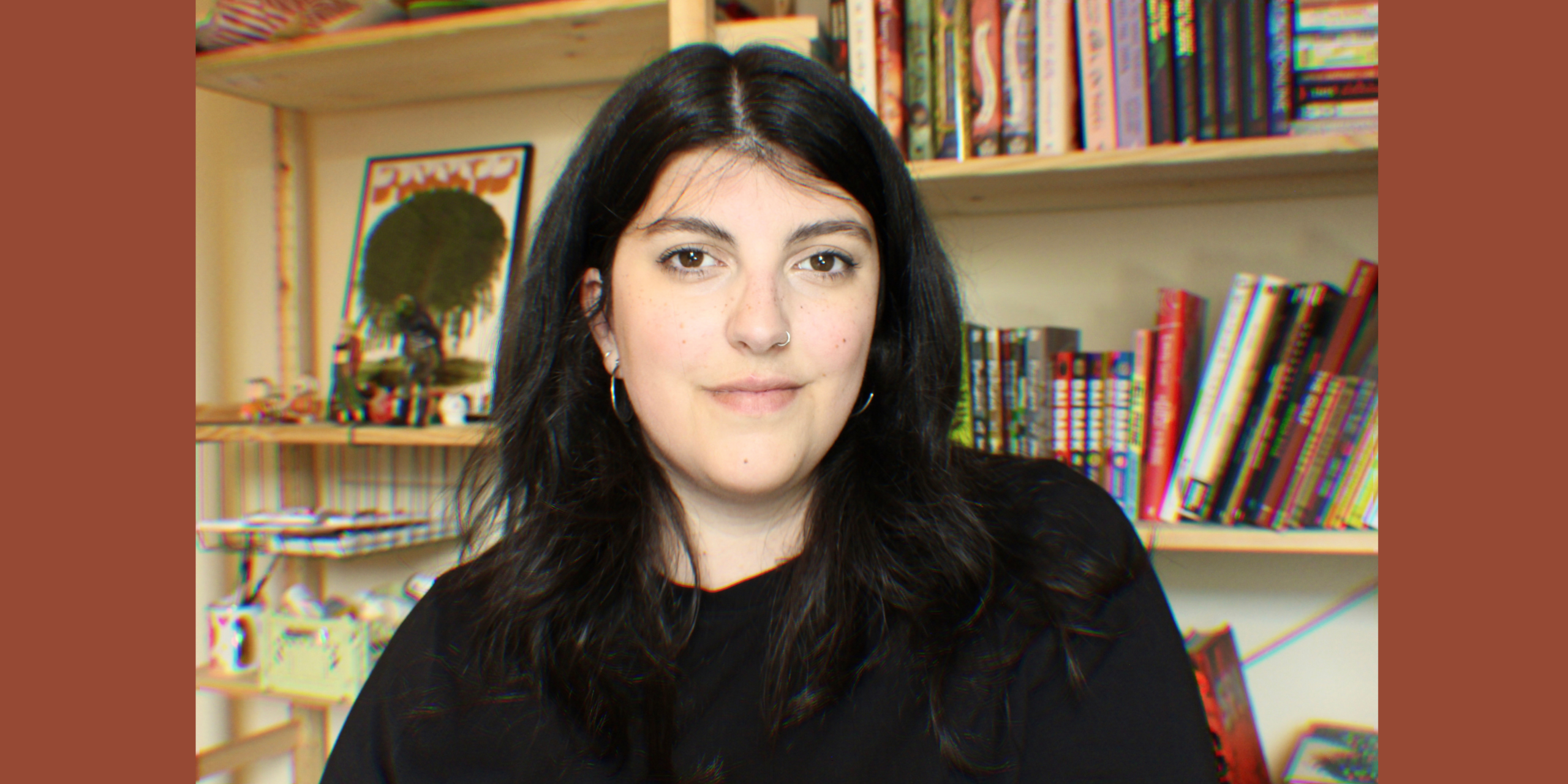
Erica Kent On The Light And Shadows Of Her Magnificent New Novel
Reader’s first meet Jessica Ryder, the captivating protagonist of Erica Kent’s Black Dog, as a smart and brash eleven-year-old living with her alcoholic father in Brookline, Massachusetts. It’s 1980 and Jessica, an ardent music fan, is devastated over the death of John Lennon. In a misguided attempt to comfort her, Jessica’s father offers her a beer. This fateful act kicks off a near-decade long struggle with alcohol and drugs, which Kent depicts with clarity and empathy. Kent masterfully charts Jessica’s adolescence as the young woman negotiates her complicated family dynamic, not only with her father, but also with her mother and sister, who live in a far different socioeconomic world in nearby Boston. What follows is not only a riveting coming of age story but also a clear-eyed examination of the often fraught road to recovery. The reviews have been rapturous for Black Dog. Library Journal wrote, “Kent demonstrates her skills with evocative and atmospheric prose” and Pulitzer-Prize winner Richard Russo raved, “Erica Kent’s Black Dog takes the reader on a truly terrifying journey, but guess what? I’m so, so glad I fastened my seatbelt, gritted my teeth, and climbed aboard.” Kent spoke with us about using her setting as a character, capturing Jessica’s voice, and allowing the story to find her.
The book takes place in Brookline during the eighties. Brookline seems such a fascinating place because it’s seems to be a city in transition. It’s so close to Boston, but also still very rural in some places. Can you talk about the setting of your book?
It has to do with, in a sense, knowing a place as a character. I’ve been asked about this with autobiography, and there’s a lot of fiction in the book, but the parts that, I guess, are reflective of autobiography have to do with Brookline and Boston, certainly in the eighties, and knowing those places. I would say that was a huge factor, just as a touchstone, writing from inside a place that I knew. We actually lived near Fenway Park, and so it was right on the line of Boston and Brookline. I think of the setting as Brookline, but also Boston kind of folded in. There are parts of Brookline, certainly where the high school is, where there are neighborhoods and it’s more suburban. I don’t want to misrepresent it. But it’s kind of a funny place because it’s an amalgamation. It’s a wealthy place. It’s a place that has sort of a grittiness to it, but it also has beautiful trees and and landscape. The woods I think were taken a little bit from Andover, Massachusetts, which is north of the city, and that’s where I spent my first years. So I’m sure that sort of suburban vibe was was baked into it too.
Jessica’s a character who readers’ hearts will really go out to. She’s so smart and resilient, but there’s also this innocent quality to her. Can you talk about developing her as a character and tracing her journey throughout the book?
She was a long time in coming. Originally, it was a male protagonist. I used a male protagonist, I suppose, in a way to distance myself because I didn’t want to write a thinly disguised autobiographical novel. But when I switched into the female voice, she really came alive. For a while, the first few years of this were just me hanging out with the characters, specifically Jessica. I think the voice was developed over a long period of time before I actually started writing what began as the first Black Dog story. It felt natural. I was a high school English teacher for a long time, so I have a sense of the vernacular of a kid. It was based on just listening to a voice in my head, the character’s voice in my head.
The book starts with Jessica when she’s eleven and ends when she’s about nineteen or twenty. That’s such a critical period of time where your identity is changing and you’re developing into the adult you’ll become. What was the challenge for you as a writer of accurately depicting Jessica’s voice at all the different stages of her life?
I started working on this version in 2018. By that point, I had spent a lot of time with teenage voices. In a way, it wasn’t easy, but it was sort of within my grasp. In terms of delineating. I think it came about organically, which is kind of a lame way of answering the question. (laughs) But it definitely had a feel of authenticity right off the bat. I think that can happen naturally, and it’s a great gift when it happens naturally. Forcing that, I don’t think works.
A lot of times, Jessica’s under the influence, whether she’s been drinking or using drugs, and that seems to add an added layer of complexity to capturing her voice.
I think that’s true. I think with addicts, and being in recovery myself, it’s almost like you’re two people. Your voice kind of echoes through both people. Because I spent a lot of time with her, kicking around with her, it wasn’t far out to imagine her drunken voice, just because of an emotional core of need that was coming from her. For example, when her dad first agrees to give her that first sip of beer the night that John Lennon has has been killed. Rather than focusing on, “Oh, the voice has got to sound like this,” it was more focused on the idea of a relief, this relief that’s provided to this character. Then the voice comes out of that.
Jessica has very different relationships with her mother and her father. Can you talk about creating the dynamic of her parents?
I’m 57 and I was born in 1969, so I came of age in the eighties. I’m a parent now to a nineteen-year-old, and there’s a huge difference. With Gen X, we were called the latchkey kids where you came home from school, you let yourself in, and kind of took care of yourself. That’s definitely in here, in some ways. It’s kind of benign neglect, in terms of the way parents were hovering around the edges, like a distracted parent, sort of the opposite of a helicopter parent. Her dad is such a vulnerable character in a sense. She knows that, and he knows that, and they have a real affinity. I think of the book as a love story between the two of them, just in terms of their affinity to one another. Alcoholics tend to be able to relate to each other on a pretty deep level, and so that is there with them. The mother and [her sister] Ellis are removed to an extent. They look different and they talk different. The mother is very removed in terms of her leaving, obviously. It’s a sweeping statement, but a lot of times I think there’s a lot more danger of kids smoking cigarettes and falling off bikes and the rough and tumble nature of a middle class suburban context.
Jessica interacts with a variety of teenagers, and they all seem so specific and real. How did your teaching experience and working with high school kids inform your creation of the different teenage characters?
I’ve taught in all kinds of different settings, socioeconomic and otherwise. I think kids tend to be the same, not in terms of external factors, but in terms of a rawness, an unintentional honesty, a vast need that is sort of an impossible thing to be met. For example, Mr. Ryrie, Jessica’s English teacher, is based a bit on a teacher I had in high school who, without saying much, just understood me. I could trust that he understood and that he tolerated me, and wanted what was best for me. I think when I was a teacher, I tried to convey that to kids, and I did have good relationships with kids. They trusted me. I wasn’t the parent. I would say my downfall would have been not being a great disciplinarian, but along with that came a lot of trust and being a bit of a therapist in a way to a lot of kids. So hearing stories of kids, watching them, helped me out. I think also needing to place the story in the context of the eighties, because this was pre-social media. If I was to try to write this book now and base it on what’s going on now, I wouldn’t be able to bring an authenticity to it. The emotional places of the characters, sure, but in terms of social media and the internet, that would be a real stretch for me.
The book very honestly depicts some dark times in Jess’s experimenting with alcohol and drugs, but it also is a book about recovery. There’s a lot of optimism and hope baked into the story. How did you approach constructing the novel in terms of bringing the reader through these really dark times and balancing that with the hope inherent on Jessica’s story?
The honest answer is I don’t think of it as dark. But everyone tells me, “Oh boy, it’s dark.” I don’t write from that place of, “I’m gonna write this dark story.” I find the story, or the story finds me, and I kind of go from there. I definitely wanted to stay away from the typical trajectory of a recovery novel, where everything is terrible when you’re using drugs, and then everything gets amazing when you get sober. I really thought about shafts of light and shadows, and how they work off each other. Because it’s a childhood story, I think there’s naturally an optimism, an innocence that even in the midst of these really tough situations, there is still hope, there is still innocence there. I definitely didn’t want to leave things on a real downbeat note because I think her getting sober is super important to the story.
As a reader, you get a sense of those moments of light.
For better or for worse, I think when you’re a drug addict and things are going okay, you’re able to somehow manage it or think you can manage it. It’s absolutely euphoria producing. It absolutely feels like there’s a puzzle piece that’s finally been put into place. There’s joy there. It’s a crazy joy, but it is a joy. So when you take that away, or it’s taken away, it’s like you have to rebuild. You have to find a way to be that’s joyful in a real way, not like a corny “I have hope now,” but “How am I going to do life now?” Luckily, there’s a lot of help.
Finally, what role has the library played in your life?
Oh man, I could go on and on about that. Growing up, my mom brought me and my sister to the library every week. We got to sit in the stacks and we got to read whatever we wanted. We weren’t allowed to see certain movies like Jaws, much to my chagrin, but we were allowed to pretty much read whatever we wanted. So I remember reading The Bluest Eye at an inappropriately young age and just being so blown away by it. The basic thing in a library is the possibility. When you walk in and so many places and people and moments are there and at your fingertips, literally at your fingertips. Libraries have always been sacred to me and just safe places. Just safe, beautiful places.
Tags: Erica Kent