April Is National Arab American Heritage Month
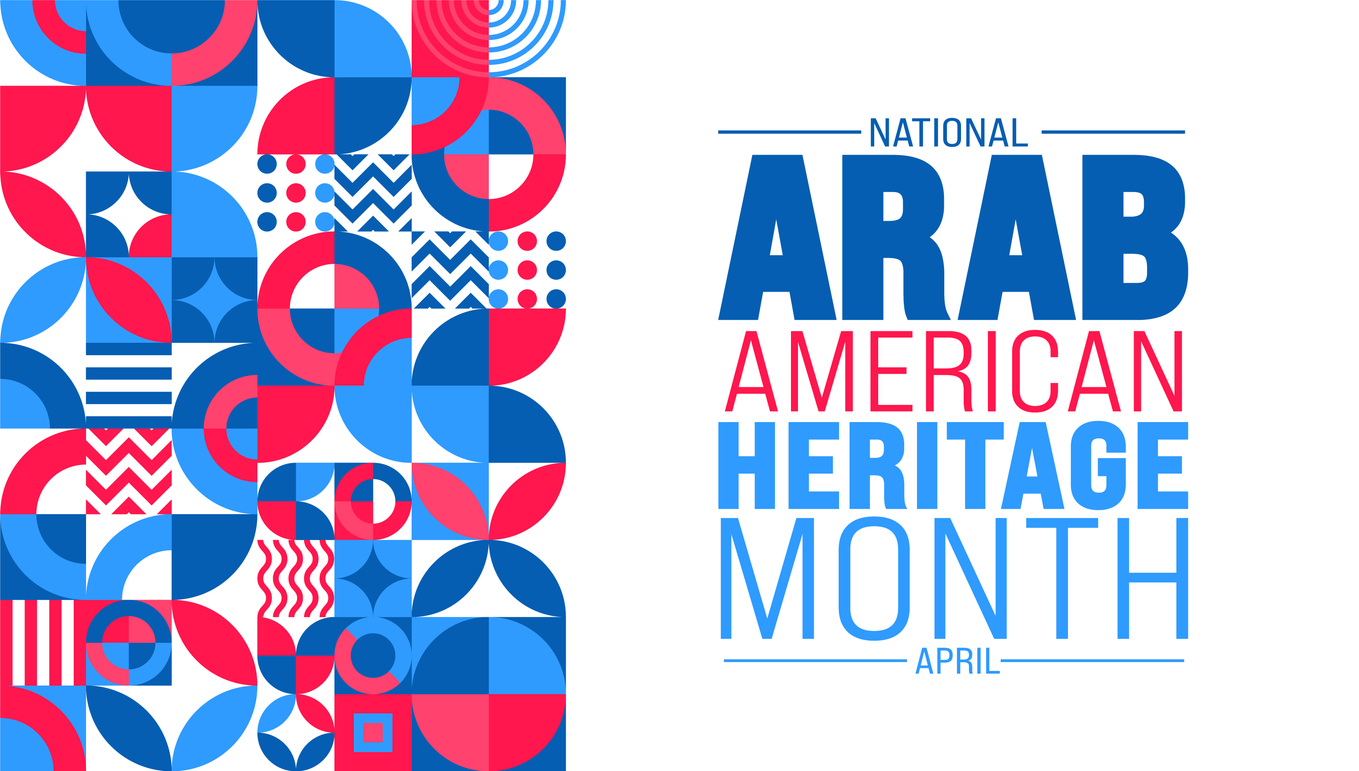
As April gets underway, libraries have an opportunity to recognize National Arab American Heritage Month (NAAHM), celebrating the vibrant culture, history, and contributions of people in the United States with roots in the Arab world. This observance highlights the long-standing presence of Arab American communities and honors their impact across generations. Libraries are uniquely positioned to help bring these stories to their communities through programs, collections, and outreach.
National Arab American Heritage Month celebrates the diverse accomplishments, traditions, and lived experiences of Arab Americans across many areas of society, from scholarship and public service to business, literature, the arts, and community life. While the month received federal recognition in 2021, Arab American communities have been shaping the United States for centuries.
Some historians point to Estebanico Azemmouri, a Moroccan man who arrived in what is now the United States in 1527, as one of the earliest documented Arabs in North America. Later, Antonio Bishallany, who immigrated from Lebanon in the nineteenth century, became one of the first members of the community that would come to be known as Arab Americans. These early histories make clear that Arab American presence is not new, but deeply embedded in the broader American story.
Arab immigration expanded significantly in the late nineteenth and early twentieth centuries, as people came to the United States in search of opportunity and stability. Industrial centers such as Detroit drew immigrants from around the world, including many from Arab countries. Subsequent waves of immigration were shaped by war, political instability, and economic hardship, bringing individuals and families from countries including Lebanon, Egypt, Morocco, Yemen, Iraq, Sudan, Somalia, and Syria. Many came seeking safety, stability, and the opportunity to build new lives.
Today, according to the Arab American Institute, there are an estimated 3.5 to 3.7 million Arabs living in the United States, though that number is widely understood to be an underestimate. In part, this is due to the way demographic surveys have historically classified Arabs as white, contributing to the erasure and invisibility many Arab Americans experience. Accurate representation matters. Arab Americans are not a monolith. There are Black Arabs, white Arabs, brown Arabs, and multiracial Arabs, as well as a wide range of religious identities, languages, and cultural traditions.
This diversity is essential to understanding Arab American identity. While there may be shared histories, values, or cultural touchpoints, Arab communities are not defined by a single narrative. Recognizing this complexity helps avoid stereotypes and creates space for more accurate and meaningful representation.
Literature offers one powerful way to explore the richness of Arab American voices. Influential writers include Kahlil Gibran, author of The Prophet, and Ameen Rihani, as well as contemporary authors such as Naomi Shihab Nye, Laila Lalami, and Randa Jarrar. Their work reflects a wide range of perspectives and experiences and can serve as an accessible entry point for readers and library programming alike.
For libraries, National Arab American Heritage Month is not only a time to celebrate, but also an opportunity to deepen understanding, expand representation, and create spaces where individuals feel seen, supported, and included. Public libraries are especially well positioned to help communities learn about the histories and contributions of Arab Americans while also challenging misconceptions.
Ideas for Library Programming