“I Wanted To Write Something That Felt More Like A Hug” – DeAndra Davis On Her Enchanting Coming-Of-Age Novel
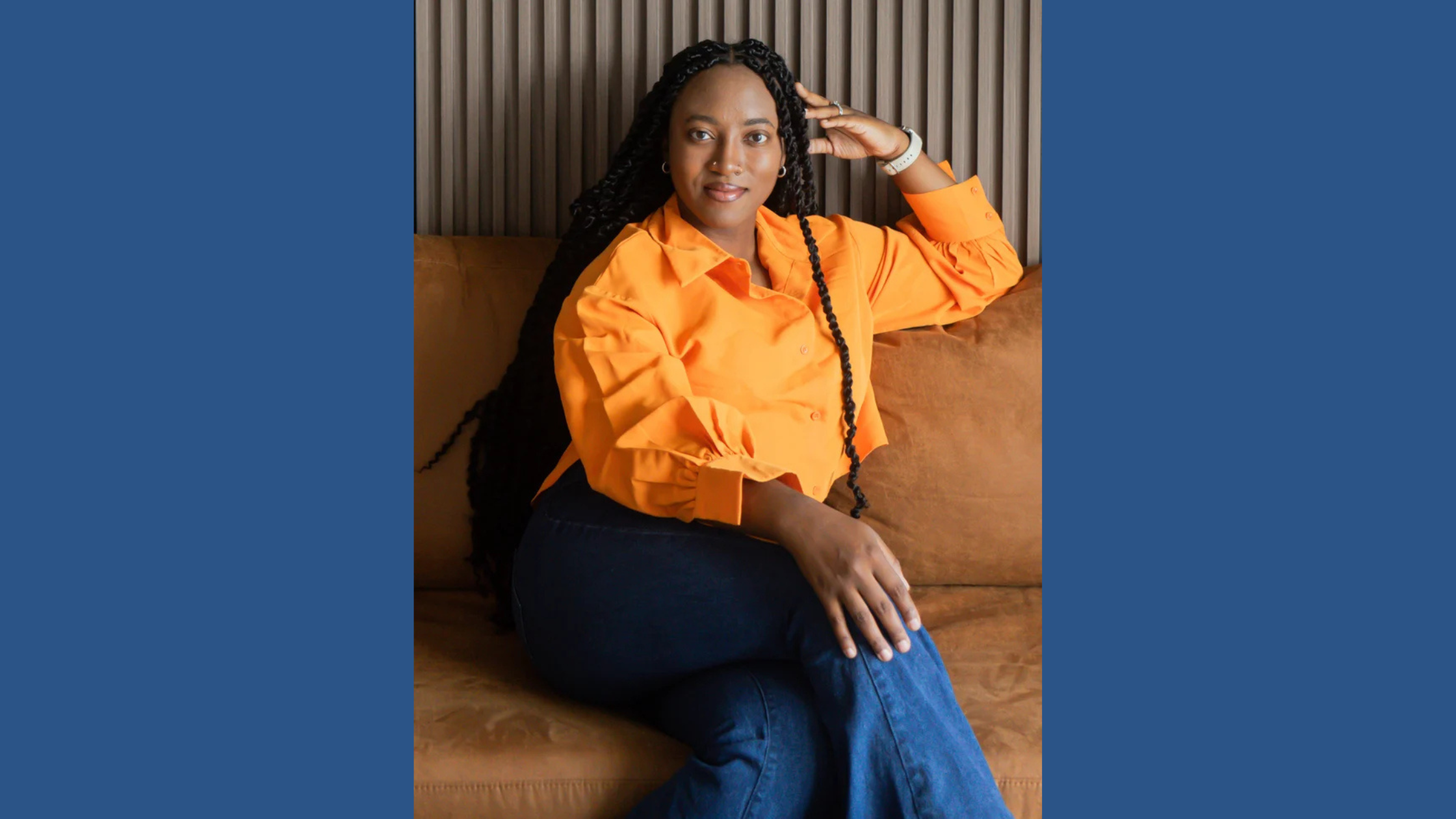
Despite being smart, funny, and her class’s valedictorian, Jaliya has spent much of her high school career ignored by her classmates. After graduation, her dad encourages her to leave their South Florida home to spend the summer in Jamaica with her family, who she hasn’t seen in several years. Although reluctant to do so, Jaliya changes her mind after receiving an unsigned letter postmarked from Jamaica asking when she’s going to return there. Convinced the letter is from her estranged mother, Jaliya devises a plan to return to Jamaica, find her mother, and figure out once and for all why she left their family long ago. Yet once she’s back in Jamaica, Jaliya’s life grows unexpectedly richer. She reconnects with childhood friends and finds herself caught in a love triangle between her schoolgirl crush, Andre, and an intriguing new girl, India, who has just moved to her cousin’s neighborhood. DeAndra Davis’s The Lovers, The Liars, And Me is a tender coming-of-age story that sensitively handles estrangement, coming out, cultural identity, and the complicated feelings that arise when you enter the adult world. In its starred review, Booklist raved “this lyrically written novel is centered around nuanced and deeply lovable characters, and Jaliya is a protagonist who readers will want to grow and change with as she figures out her own path.” Davis spoke with us about crafting complicated relationships, allowing her teen characters to make mistakes, and capturing the first-generation immigrant experience.
Jaliya has so many different relationships, but I think one of the foundations of the novel is her relationship with her dad. They’re so close and they’re so supportive of each other. What went into creating that relationship?
There was a part of it that is—I don’t necessarily say wishful thinking—but kind of that ideal relationship that I feel like anybody would want to have with their parent, especially when you’re in a situation where you don’t necessarily have both parents, right? Because I was already putting my character in a situation where she was down to one parent, I really, really wanted her dad to be this ideal and to build this good relationship. When I had to pull from something, I pulled from my relationship with my own kids and how my kids and I are. We joke around a lot. I’m their parent, but I’m also very much their friend. We connect on a lot of things. It’s always really fun. They always feel comfortable enough to come to me and talk to me. I wanted to write a relationship like that because I didn’t necessarily have that relationship with my parents when I was growing up. I have a relationship like that with my mom now, but not when I was growing up. I had to think about kind of what kind of parental relationship I felt like Jaliya needed when she was already dealing with so much abandonment.
Jaliya’s at this really critical transition point in her life where she’s graduated college and she has a lot of feelings about leaving her dad and being out on her own. At the same time she’s desperate to forge a connection to her mom—she frequently uses her mom’s old deck of tarot cards to help her make decisions. What intrigued you about exploring a young woman at this critical point in her life?
Whenever I think about a coming-of-age story, I always think about what do I feel like young people need? Is there a gap that I can fill? What are the experiences that are really important? Graduating high school was such a big one. When you graduate high school, you’re suddenly thrown into this world of adulthood where you have to make all of these decisions about what you want to be for the rest of your life. The truth is, where you go to college can really determine the rest of your life. A lot of times people stay in the towns that they went to college, right? Oftentimes you graduate and it’s easier to find a job there because you’ve already established something—maybe you did an internship there or maybe you worked there. That determines the scope of where you might be for a much longer time than when you just go to college. You’re making so many big decisions, and the truth is you’re really young. You’re so not ready to make those decisions. Oftentimes you’ll say, “Okay, I want to be this,” and then you’ll get halfway through college and be like, “Actually, I don’t want to be that at all!” It’s so much pressure.
I remember feeling that pressure when I was graduating high school. I was younger than everybody else, because I had just turned seventeen. I just remember how stressful and scary that was. I really wanted to write something where I acknowledged that it’s okay to be scared for a second. It’s okay to take a beat and be scared. It’s okay to not be sure. It’s okay if you don’t have it all figured out at seventeen or eighteen. I wanted kids to have that comfort of knowing that it’s okay to not have it figured out.
But also I really wanted to incorporate the tarot cards and think about her character, because sometimes there is comfort in getting an answer from somewhere that feels like it’s not coming from you. (laughs) Tarot is this really, really interesting thing, because it’s so deeply personal. You’re interpreting it, you’re reading it, and the answer is coming from you and your interpretation of how you want to read the cards. But because the cards carry meaning in their own way, it does feel like the meaning’s not coming from you, so it kind of takes this pressure off. Like you’re not the one that’s making this decision, even though you are the one that’s making the interpretation of the cards, if that make sense. I wanted to find a way to externalize that idea of indecision. Tarot again is a really great vehicle, because it can work in two parts. It can be a comfort to some people. They use it in a way that is comforting and grounding, but I know that it can also be anxiety inducing for some people. They use it in a way that feels dependent, like “I need it before I make any decisions! I need it to tell me exactly what to do!” They use it in a more prescriptive way. I wanted to mirror Jaliya’s growth in this external way, in the way that she was using the cards.
I think everyone can relate to the comfort you find in having an external force giving you more of a guideline, especially at a time when you’re faced with so many options.
It’s like reading your horoscope every morning. “Is it gonna be a good day? Is it gonna be a good week or a bad week?” I think so many people have some version of that—I’m not saying every person—but so many people have some version of that. When you’re scared to make a decision on your own, it’s better to find a vehicle, because then if it goes wrong, you can’t blame yourself. You can blame the cards, you can blame the horoscope, or you can blame something other than yourself if something goes wrong.
One really moving aspect of the book is all the amazing friendships that Jaliya has. She has her best friend from home, Ketta, who supports her through some rocky moments in high school. In Jamaica, she reconnects with her cousin, Shevaughn, and her childhood friends, Deon and Andre. She also meets India, a new friend of Deon’s. How did you build the different relationships Jaliya has, which all seem to fulfill a different need in her life?
I really wanted to think about—especially with it being a coming out story—the ways in which found family is so important in the queer community. I really wanted it to hinge on her having a found family. Because again, it really is a cornerstone of the community to have that, especially when you may be in a situation where your own family is not receptive. While that may not be true of all her family, there is some conflict there. It’s so funny because my debut has a lot more conflict than this one does—maybe not necessarily, but just in different ways. In my debut, I had characters who were like a family for my main character, but then there were quite a few characters who were oppositional. Coming off of writing something that was so intense, I really wanted to write something that felt a little bit more like a hug, I guess.
I had a lot of fun picturing how relationships can manifest in different ways, how they can look different, and how you can have different levels of closeness with people. It was so fun writing all of their personalities too. I really wanted to think about different personalities and how they can play off each other. I don’t normally do a really big cast of friends—and to me, this is kind of a big cast of friends—only because if you’re writing a scene, you have to think about who’s still there, who’s talking to who, when’s the last time somebody else talked, how they’re responding to each other, and how their personalities would come out when they’re all together. But I definitely had a lot of fun with it. Some of my favorite scenes are when they’re all in the same room and the energy is just bouncing off each other. It felt so real. It reminded me a little bit of my friend groups in high school—this person’s sarcastic, this person’s cracking a joke, this person’s taking it a little bit too serious. How do all those things meld together?
For me, it was so important for her to have that found family, for her to know that it comes in different spaces, both in people who are blood related to her, in people who’ve known her for a long time, and people who haven’t known her for as long. It was also important for us to understand how those relationships came to be. We have the understanding that obviously Shevaughn is her cousin, but also that Deon and Andre have very much been a part of her life essentially since she was a baby. They’re these people who’ve been adopted into her world view. Then India is very new and comes in differently. We come to understand the ways in which people represent different pillars in her own life. Some of them kind of mothering her, some of them meeting her where she is, some of them obviously meeting her in more of a love interest sort of way. It was just really fun to see those different interactions, and how I could show that all of those things are still family. I was very interested too in the idea of if there is maybe a romantic interest, can you still be family, like this friends to lover sort of thing? How does that work? How does that look? Does that have to ruin a friendship?
There’s so much mystery in the book, not only in the search for Jaliya’s mom, but also a lot of the characters harbor secrets that get revealed throughout the story. Was that sense of mystery something that was in the novel from the beginning, was it something you discovered along the way, or a mixture of both?
I feel like it’s always a mixture of both for me. Before getting published, I was very firmly a pantser. I never planned anything. I would just sit and write my way into the story. And then publishing is like, “No, you need a synopsis first.” (laughs) And so while I always had a rough plan that she would be looking for her mother, I’m also really addicted to characters feeling like whole people. I like to take my time and make full blown character sheets. I know everything about them: what their fears are, what they’ve been through, their zodiac signs, their Myers Briggs, their Enneagrams, everything! I try to understand everything about my characters, so that they can show up as real as possible on the page.
It only made sense for everybody to have other things going on, because they’re all about the same age. They’re all in these pivotal moments, and they’re all dealing with things changing in different ways. I really wanted to see what does it look like when friendships are tested by feelings? What does it look like when dynamics are changing? When you’re used to certain things, what does it look like when maybe—like in India’s case—you’ve been a little bit smothered because of something that’s happened. How do all of those things look, and how can you start to work past it? They’re all in this deeply transitional space of “I am still very much young, but now I’m supposed to be preparing to be an adult and make decisions for myself and figure out where I really want to fit in the world.” So it didn’t make sense for me for Jaliya to be the only person figuring those things out. I felt like it only made sense if they were all in their own type of transitional period and just collectively helping each other.
All the kids felt so alive and real, and even when they’re lashing out, it feels so believable.
I always try to write teens as they are. I’m so against this idea of sanitizing fiction and making it seem like teenagers are not making mistakes, being petty, being childish sometimes, or doing things that are not the smartest things in the world. I feel like all of us can probably list at least five to ten things that we should not have been doing when we were teenagers. I know that there are so many restrictions in young adult literature now, but I feel like if we over sanitize it, it’s never going to seem true to the to the kids that we’re writing it for. Sometimes you’ve got to see them messing up and making bad decisions, so that when kids read it, they can also feel like, “What I’ve done isn’t that bad.” (laughs)
Jaliya’s parents are Jamaican, but when she’s in Jamaica, she sometimes doesn’t feel Jamaican enough. A big part of the novel is her coming to peace with that and her friends helping her figure that out. What went into writing that aspect of Jaliya’s character?
I definitely wanted to think about the immigrant experience, especially the first-generation immigrant experience, and what that feels like. Growing up in South Florida is growing up in a community of mostly immigrants. Where I was in Palm Beach, if you went in any direction, there may be a predominantly Mexican area here, a predominantly Haitian area there, a predominantly Jamaican area there—there are so many different cultures.
That immigrant experience is really interesting, because I thought a lot about the ways in which I had to interact with the world, being Jamaican, but being born here, and how that affected the way that I viewed myself, especially as I got older. But also I saw that that wasn’t just specific to me. It wasn’t only something that I was struggling with, it’s also something that other people struggle with, right? I’ve seen it where people grow up in their families, and if your parents are Mexican, they’ll tell you that you’re Mexican. If your parents are Colombian, they’re telling you that you’re Colombian. Same thing for me. Both my parents are Jamaican. My family’s Jamaican on all sides. Every single person that I knew in my entire family everywhere was Jamaican. I grew up with Jamaican food, I grew up with Jamaican culture, I grew up with Jamaican values, I grew up with Jamaican music. I still remember the first time I heard someone outside of my family tell me that I was not Jamaican. I was like, “So what am I?”
It’s so funny because I didn’t even realize how universal that immigrant experience is, especially in the U.S., where we’re such a melting pot of cultures. There are so many kids who you’re the first generation to be born here and you’re changing the aspect of something for your family, but you never feel completely one thing or the other. I remember showing up at school with Jamaican breakfast that my grandmother would make. My grandma lived in the same neighborhood as us, and she would wake up at four in the morning to make us breakfast. She’d walk from her house to ours in the pitch-black morning darkness with takeout boxes of a full spread Jamaican breakfast and a foam cup of tea, because we always have to drink hot tea in the morning. That’s a need. Jamaicans do not play about drinking something hot in the morning. She’d do that every morning, because we had to be on the bus at six o’clock and she didn’t want us to go to school hungry or without something hot in our stomachs. She was not playing about. She would show up all the time. I remember it was a feeling of love and care and I loved it, but I also remember the first time that I got made fun of because of it. “What’s that smell? What is that? That’s not breakfast. I’ve never seen anything like that.” And now you’re embarrassed. Now it’s that you’re weird, the things you eat are weird, the things that you do are different. When everybody else is listening to popular music, you’re listening to different music. Now you have to assimilate, because that’s not what everybody else is listening to. I’ve got to learn what everybody else is listening to so that I’m not left out. That’s a hard line to walk, because if you’re trying to adjust to fit into where you are, you’re being told by the people where you’re from that you don’t belong. But then when you’re adjusting to make sure that you remember where you’re from, you’re being told by the people where you are that you don’t belong. It’s just such a specific experience, but it is a more widespread experience than I think a lot of people realize.
I really wanted to capture that, but also how if you start adding aspects of your identity into it, that may also make you feel like you are being excluded from your culture. If your culture is not accepting of a part of your identity, then that amplifies things. I just wanted to figure out those layers and explore the ways in which there’s no one right way to be a part of your culture. None of us should feel invalidated for whatever reason, because we can’t control where we’re born. That doesn’t mean that it should lock us out of our culture, especially when we feel so connected to it.
This interview has been edited and condensed for clarity.
Tags: DeAndra Davis, lgbt youth, LGBTQIA